Europe – Ten Lessons Learned from the Catholic Response to the Ukraine Emergency
We experienced one of the largest refugee diasporas in Europe, and different corners of the world with the beginning of the war in Ukraine on February 24. The diaspora’s continuing intensity is experienced primarily by Ukraine’s neighboring countries such as Poland, Romania, Slovakia, Hungary and Moldova. Adopting the directive on free movement in the EU has been a significant milestone that has made it possible to welcome and integrate Ukrainian refugees.
The ongoing war unleashed a geopolitical scenario with real consequences at different levels. This winter, we will experience its effects more intensely with the shortage of natural gas and other supplies. Given this reality, the Catholic Church, other churches, and international actors are trying their best to accompany, serve, and defend millions of refugees, mainly women and children, forced to leave their homes.
In early March 2022, representatives of the world's leading Catholic-inspired humanitarian organisations formed a "Catholic Response for Ukraine" Working Group, CR4U, to coordinate their actions in the affected region (Ukraine, Poland, Hungary, Slovakia, Moldova and Romania). The coordination efforts' guiding principle is to cultivate dialogue with front-line actors as well as organisations at the global level. It does not intend to interfere with the initiatives undertaken by the respective members of the said Working Group. Still, it has a twofold objective: (a) to coordinate the initiatives already undertaken (or to be undertaken in the future) by the different Catholic actors, and (b) to identify new actions deemed necessary and to distribute the corresponding responsibilities.
The members of the Working Group areThe International Catholic Migration Commission with Monsignor Robert Vitillo as Secretary General; Caritas Internationalis with Aloysius John, Secretary General ; Caritas Europa with Maria Nyman, Secretary General ; the Jesuit Refugee Service Europe (JRS) with Alberto Ares as Regional Director; the Commission of the Bishops' Conferences of the European Union (COMECE), with José Luis Bazán, Secretary of the COMECE Working Group on Migration and Asylum ; the Council of European Bishops' Conferences (CCEE) with Luis Okulik, Secretary of the Social Pastoral Commission; and finally the Order of Malta with Ivo Graziani, Head of Cabinet of the Grand Hospitaller.
The Working Group collaborates closely with the following offices of the Roman Curia, such as the Dicastery for the Promotion of Integral Human Development (DSSUI) with Fr. Fabio Baggio, Undersecretary and also the Migrants and Refugees Section (M&R), with its coordinating team in the region, Yuriy Tykhovlis - Regional Coordinator - Eastern Europe, Central Asia, and Flaminia Vola - Regional Coordinator - Western Europe.
In this context, our contribution as the Society of Jesus goes hand in hand with a coordinated response at the global level under the umbrella of a joint project called "One Proposal." I invite you to know more about it in detail.
"After almost seven months of war, what lessons have we learned from our work together as Church institutions?"
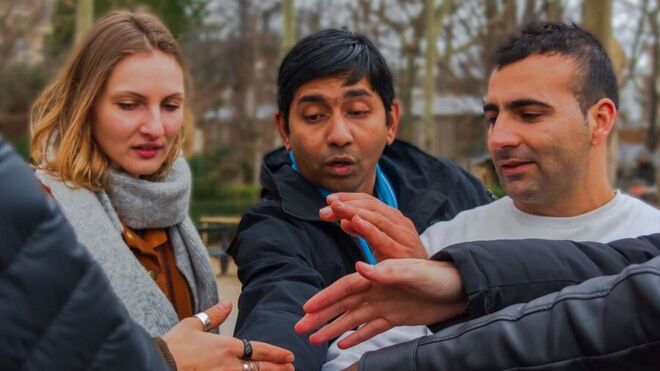
I was asked this question in the context of the Annual Conference of the Catholic Initiative for Immigrant Integration (CIII), led by the Center for Migration Studies in New York and coordinated by the Marquette University in Milwaukee.
In my case, I participated as Director of JRS Europe and as an IUEM researcher at UPComillas in a panel entitled: "Building a Church-wide response to the multiple crises of displacement". The panel explored how the Catholic community, in collaboration with other religious traditions and lay organisations, can play an essential role in responding to the world's most challenging displacement crises, bearing witness to our shared commitment to care for those most in need. There were also interventions regarding the service and advocacy responses to Ukraine's and the U.S.-Mexico border crises.
The panel moderator was our good friend Joan Rosenhauer, Executive Director of JRS USA and fellow panellists included Kat Kelley, MSW, Director of Migration and Refugee Resettlement Services at Catholic Charities USA; Vanessa Sanchez de Cañas, Chief of Staff at the Hope Border Institute; Chris Kerr, Executive Director of the Ignatian Solidarity Network; and Yasmine Jakmouj, Assistant at the Schlegel Center for Service & Justice at Creighton University.
We have learned ten lessons from our response to Ukraine. In my view, these are the main lessons:
1. The remarkable capacity of our organisations to respond to the needs of the most vulnerable people.
2. Committed teams and competent professionals, together with a large group of volunteers, collaborating in the reception and accompaniment of refugees.
3. The importance of believing in collaborative work and not living only as islands.
4. The importance of an authoritative leadership that coordinates and encourages, even if it seemingly remains in the background.
5. The importance of allocating some resources to promote coordination.
6. All organisations and members have partial capacities; and, alone, we cannot provide an integral response.
7. The great advantage of a coordinated response is that together, we can offer a comprehensive perspective and a much more articulated response.
8. When we are able to articulate our collaborative integral work, the donors and benefactors are more than willing to commit themselves to the emergency. We all gain credibility.
9. We need to grow not only in dialogue and general collaboration but also in better articulating common projects.
10. Coordinated and common work are rooted in the Gospel values of communion and service to the most disadvantaged.
We have much more to learn together with other companions along the way because, unfortunately, the emergency in Ukraine continues.
We join the prophetic voice of Pope Francis in his visit to Kazakhstan for a path to peace and respect for human rights in the context of the upcoming World Day of Migrants and Refugees that we will celebrate next Sunday, September 25.
Alberto Ares Jesuit Refugee
Service - JRS Europe Director
Source : Religion digital

Related Posts:
The Arrupe Migrant Centre at the Jesuit Church of Saint Joseph has also opened its doors to migrants looking for a place to stay after being refused access to the collective shelters. Mattresses are piled out on the ground and offices have been turned into bedrooms to provide a temporary sanctuary to those in need.

The Central American Province of the Society of Jesus marks the first anniversary of the Nicaraguan government's confiscation of the Central American University, condemning the violation of education rights and academic freedom. They call for an end to repression, the release of political prisoners, and a return to dialogue and justice.

Stan Swamy Day in Viragalur was a moving tribute to a man who devoted his life to justice and the upliftment of the marginalized.

The worldwide network of Jesuit organisations, Xavier Network, involved in responding to humanitarian crises around the world, expressed shock at the April 2 killing of 7 aid workers delivering essential food aid. "We cannot be silent." Xavier Network joined the global Jesuits' call for "an immediate ceasefire, for negotiations and for the beginning of a process that will bring freedom, liberty and justice for all in the Middle East, the only road to true peace."
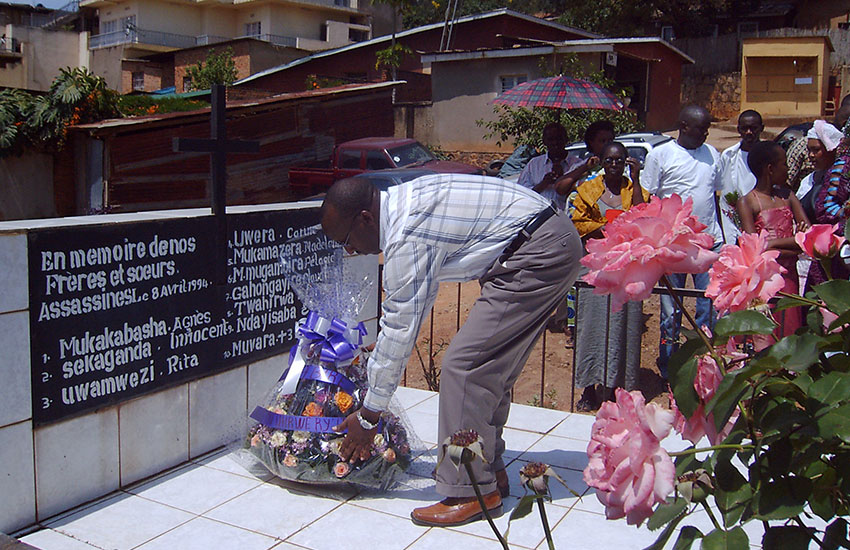
On the memorial day of the 1994 genocide against the Tutsi, J. Baptiste, a Jesuit genocide survivor from Rwanda, shared his story of the tragic event. On behalf of fellow Rwandans, he concluded with a prayer: "My prayer today is to find the last remains of the victims…, then [this] commemoration will mean something different. Only then will our wounds heal and the ongoing reconciliation process move faster."
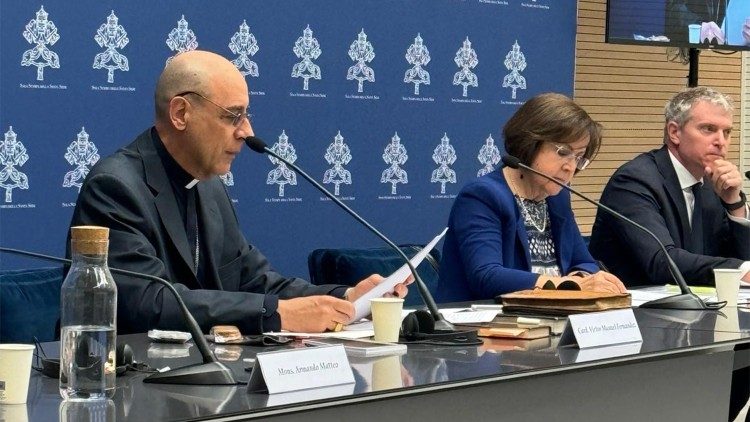
To commemorate the 75th anniversary of the Declaration of Human Rights, the Vatican published a new document, Dignitas Infinita, which condemns, among other grave violations, emerging forms of digital violence against human dignity, such as Cyberbullying, Online Hate Speech, Social Exclusion, Economic Exploitation, Digital Surveillance, Body Shaming, and Microaggressions.