Spain – We call for an Inclusive and Equal Back to School for 244 Million Children Worldwide
Entreculturas warns about the conditions and contexts that will make the right to education especially difficult for millions of children in the world, with a special focus on those with disabilities:
o Globally 1 in 3 children with disabilities of primary school age is not in school. People with disabilities represent 15% of the world's population, yet they are among the most marginalized in any community, including those affected by the COVID-19 crisis, which has disproportionately impacted them. Children with disabilities are 4 times more likely to be victims of any type of violence in all settings-at home, in the community, and at school-including cyberbullying, and are nearly 3 times more likely to be victims of sexual violence, with girls most at risk.
o The educational slowdown caused by the pandemic COVID-19, UNESCO estimates that the pandemic has set back the gains that had been made in expanding access to education by two decades and according to the latest assessment presented by GEM (Global Education Monitoring Report) it is projected that there will be 80 million children out of school by 2030.
o Migrant, refugee and forcibly displaced children. Wars currently affect more than 420 million children worldwide. In the contexts of migration, displacement
o and refuge, the situation of persons with disabilities invariably worsens, as they lack the care and resources necessary to maintain acceptable living conditions. Following the wars in Syria and Ukraine and the conflicts in Yemen, Afghanistan and Haiti, for example, many people with disabilities have fled their countries in search of protection and asylum. It is important to note, moreover, that emergency situations can also cause or aggravate disabilities
o Girls and women who are left out of the school system. Before the pandemic, 130 million girls between the ages of 6 and 17 worldwide were out of school. Today, an estimated 20 million girls may not return to school and these girls are exposed to exploitation, abuse and extreme violence. In the case of girls and young women with disabilities, they face up to 10 times more gender-based violence than those without disabilities.

To this end, the international community and States have an obligation to ensure lifelong learning, from early childhood to adult education. They must therefore:
- Deepen the human rights perspective in education and recognize inclusive education as a human right, favoring the maximum development of the personality, capacities and competencies of students with disabilities.
- To improve the quality of inclusive education and the training of educators.
- Promote co-responsibility and transparency in the management of public policies to guarantee the educational inclusion of people with disabilities.
These recommendations will only be feasible if inclusive education is adequately funded at the domestic level, as well as global initiatives, programs and projects of bilateral and multilateral international cooperation.
The UNESCO Summit that calls for the Transformation of Education to be held this September is a key international moment that Entreculturas believes should be used to challenge the political representatives of our country to invest in education and inclusive education so that no one is left behind.
In view of this situation Entreculturas demands to the Spanish Cooperation:
- To recover the investment in cooperation in the path of 0.7% and to focus efforts on aid to basic education.
- Increase the percentage of the humanitarian action budget allocated to education to at least 6%.
- Allocate at least 3% of total Spanish ODA to Education for Sustainable Development and Global Citizenship.
- Maintain and strengthen the commitment of decentralized cooperation to education.
- Take advantage of the 6th Master Plan for Spanish Cooperation as an opportunity for the inclusion of people with disabilities.
- Implement and evaluate compliance with the Spanish Strategy on Disability 2022 -2030, specifically by allocating the necessary financial resources to overcome the strategic challenges related to inclusive education.
In addition, through its campaign lasillaroja.org, it offers materials, awareness-raising elements and the report "Educating is including, a path that guarantees rights" to deepen on the right to school as a path to social equity, as access to a place of transformation where everything is possible.
Source : Entreculturas
Related Posts:

The Central American Province of the Society of Jesus marks the first anniversary of the Nicaraguan government's confiscation of the Central American University, condemning the violation of education rights and academic freedom. They call for an end to repression, the release of political prisoners, and a return to dialogue and justice.

Stan Swamy Day in Viragalur was a moving tribute to a man who devoted his life to justice and the upliftment of the marginalized.
The worldwide network of Jesuit organisations, Xavier Network, involved in responding to humanitarian crises around the world, expressed shock at the April 2 killing of 7 aid workers delivering essential food aid. "We cannot be silent." Xavier Network joined the global Jesuits' call for "an immediate ceasefire, for negotiations and for the beginning of a process that will bring freedom, liberty and justice for all in the Middle East, the only road to true peace."
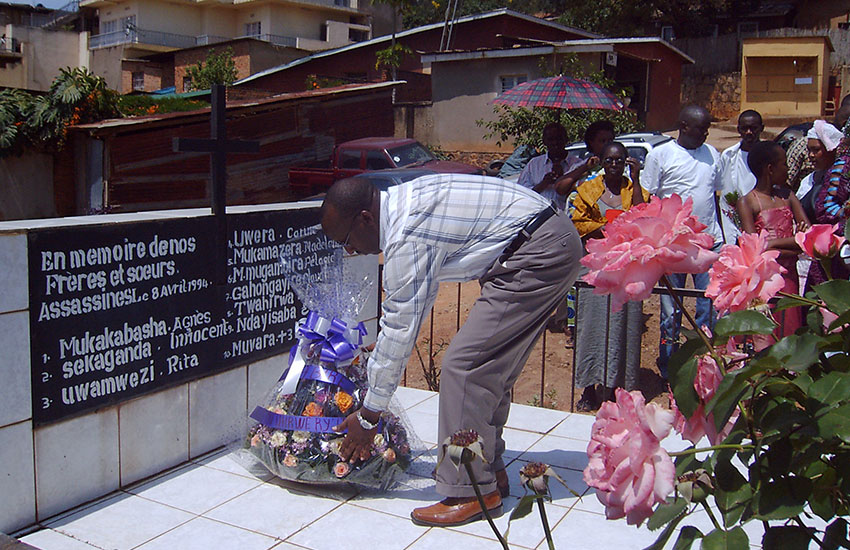
On the memorial day of the 1994 genocide against the Tutsi, J. Baptiste, a Jesuit genocide survivor from Rwanda, shared his story of the tragic event. On behalf of fellow Rwandans, he concluded with a prayer: "My prayer today is to find the last remains of the victims…, then [this] commemoration will mean something different. Only then will our wounds heal and the ongoing reconciliation process move faster."
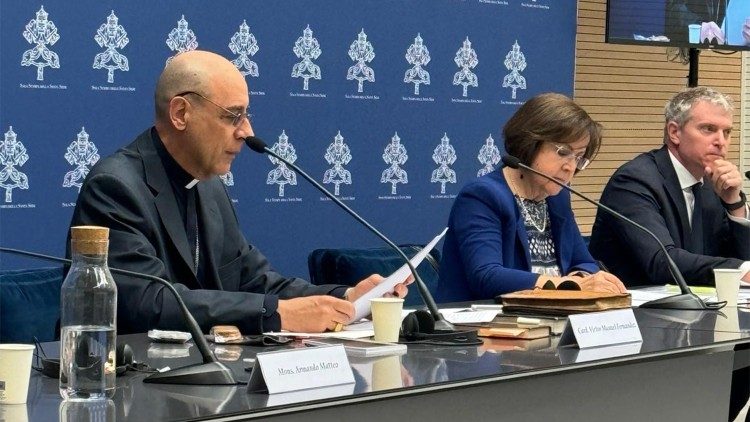
To commemorate the 75th anniversary of the Declaration of Human Rights, the Vatican published a new document, Dignitas Infinita, which condemns, among other grave violations, emerging forms of digital violence against human dignity, such as Cyberbullying, Online Hate Speech, Social Exclusion, Economic Exploitation, Digital Surveillance, Body Shaming, and Microaggressions.
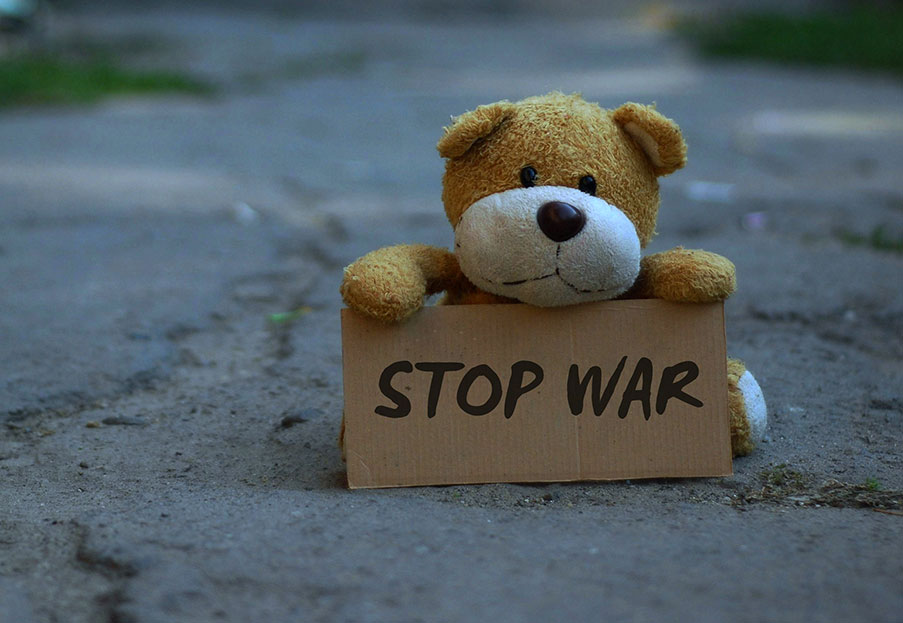
After almost six months of war in Gaza, the Society of Jesus released a statement calling for peace. The Jesuits avow to follow Pope Francis's voice, who has repeatedly warned that war is a defeat and called for negotiations—and the beginning of a process that will bring freedom, liberty, and justice for all in the Middle East--the only road to true peace.