USA – A Heart Broken Open for Migrants
The Kino Border Initiative is in an exciting and promising moment of transition. Last month we commemorated the one-year anniversary of our migrant aid center. On March 1, we ushered in a new chapter for KBI now under the leadership of our Executive Director, Joanna Williams. With Father Sean Carroll’s last days upon us, we express our gratitude to him for his twelve years of service at the Kino Border, cultivating and growing our ministry on the border. Our annual fundraiser on March 21st serves to celebrate our first year of operation in our new building, welcome Joanna to her new role, and celebrate Fr. Sean’s tenure. This month’s feature article brings you inside KBI’s new building and invites you to embrace the spirit of welcome literally painted on our walls that has been embodied by Fr. Sean that will undoubtedly continue under new leadership.
The Big Move
The space in which we and migrants are received each day is a tangible indication of the unwavering and outpouring support of our benefactors that has allowed for immense organizational growth since the founding of the Kino Border Initiative in 2009. Just across the street is a reminder of our modest beginnings–the building where KBI’s mission and vision was cultivated. “It’s a space that is dear to the KBI family,” says Fr. Sean Carroll, previous executive director of the Kino Border Initiative and one of its founders along with Sister Maria Engracia Robles Robles and Father Pete Neeley. “People would find corners of the module in order to provide legal support or pastoral counseling, first aid, and a whole variety of services in a small space. People improvised and adapted…But we knew right away that we were space challenged.”
The dream of upgrading to a larger building was always in the back of Fr. Sean’s mind. KBI looked at the current building we are in numerous times over the years, but officially made the purchase in 2018. As a warehouse and former factory, “it was wide open and full of potential,” he says. “However, it was a lot of space that needed to be adapted.” Jose Luis Cuevas Junior, a local architect and current KBI board member, presented the designs for a building that would be open, bright, and colorful. For those blueprints to become a reality, we publicly invited our supporters to help us make the transition to the new space possible by launching our two-year Capital Campaign from 2018 to 2020. During the campaign, 2.8 million dollars came pouring in from benefactors from all corners of Mexico, the U.S., and beyond. These funds covered the purchase of the building, land, remodeling, as well as the first year of operation, which we just completed last month. “We’re happy, blessed, and fortunate,” says Fr. Sean. “We’re so thankful to those who have made this dream a reality.”
Capturing the Spirit of Welcome
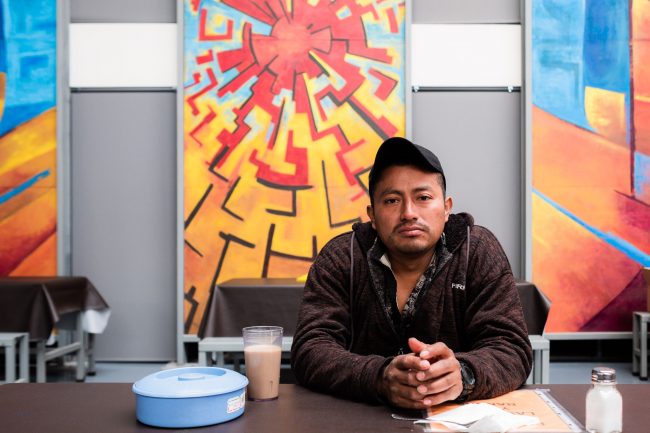
Beyond raising the funds to cover such a large project, there was immense thought put into how the space would be converted. Fr. Sean details and commends the deliberation behind the building’s design: “The architect was intentional in making it an open and welcoming space, and not making it look like a detention center.” This openness has also allowed us to artistically capture the signature welcoming spirit of KBI. Upon entering the front doors of the building, the first thing one sees is a large dining hall with the capacity to seat nearly two hundred people at once. Towering over the eating area is a floor to ceiling mural spanning five panels and bursting with brightness. The painting is a cubist version of outstretched and embracing hands and the heart of Jesus. “There aren’t the wounds, but I truly see these as Jesus’ hands and his heart being broken open in that spirit of welcome to the migrants.” Surrounding the heart and Jesus’ hands are images and icons that symbolize the Catholic values in which the work of KBI is rooted. Standing at the base of the mural, Fr. Sean points out the imagery of the Eucharist, Father Kino, scripture, and symbols of service.
Sitting at one of the tables in the dining area, a Guatemalan migrant named Ever looks up at the large mural. It is his first day at KBI in which he is received in the dining area and provided a hot meal, personal hygiene items, and a change of clothes before his intake with our social worker to receive ongoing services. After finishing his meal, he peers up at the mural reflecting on what it means seeing Jesus’ hands extended out to him: “We leave our homes and do so alone. Sometimes the only person accompanying us is Jesus. We practically put our journey and ourselves in Jesus’ hands…arriving here, well, we stumbled upon a marvellous thing, a place that brings joy.”
Embodying the Spirit of God
Fr. Sean goes on to reflect on the way in which this mural offers embrace to the migrants and reminds us all to incorporate that spirit of welcome in our daily work. “I’m really moved by the fact that when migrants walk in and these murals are so big and their attention is drawn to that heart, and it’s that heart poured out for them and to them in all that they have experienced and all they have endured, whether that’s been detention, being extorted along the way, being separated from family or their own children. In the midst of that, [there is] this image that Kino welcomes them and Kino loves them. I think it evokes really powerfully who we want to be to the migrants.” This love and embrace is something Fr. Sean himself embodies and his receiving spirit has been felt by so many at KBI, especially the migrants.
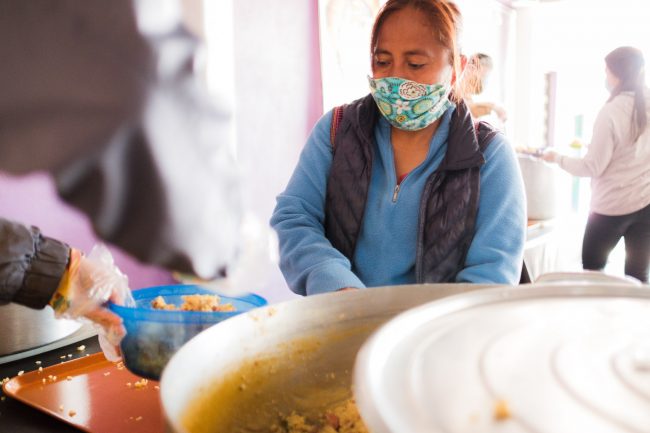
Esmeralda, a migrant from Guerrero, Mexico, has been in Nogales since November of 2019 and comes to Kino nearly every day to pick up food for her four children and husband. When she comes through the food service line, she is often greeted by Fr. Sean who, without fail, is behind a large pot of beans chatting with migrants as he fills their containers to take home to their families. She says, “Father Sean is a good person, willing to help all those who arrive to Kino [Border] Initiative, someone who doesn’t discriminate against anyone…I know he’s prayed for each and every one of us.”
Josefa, a Venezuelan migrant who arrived to Kino with her son in February of 2020, the very month the new building was inaugurated says, “My words for Father Sean are that I admire him a lot. I feel like he is a person with a certain humanity to him, and I could feel the presence of God through him in the [SaveAsylum] marches. That spiritual guidance that one searches for was found in him.”
From serving beans, to providing first aid, to psychological support, we at Kino strive to live out the embrace and Catholic values painted in our colorfulmurals. For twelve years we have been inspired to do so under the administrative and spiritual leadership of Fr. Sean. In addition to influencing the way in which we receive migrants, he has also generated immense support for our mission beyond these walls. After explaining the symbolism of the large five-panel mural, he points out another prominent piece of artwork overlooking the dining area: a large, mosaic type depiction of two hands. “These hands recognize our major donors and encapsulate the ‘hand in hand,’ which is the theme of our event,” he says. “And it’s not just true now, it’s been true over the years–true for KBI’s ministry, true for the way we have served and accompanied migrants, true for the way we’ve worked with various immersion groups, true with our advocacy with migrants and the #SaveAsylum campaign and true in the development of this new facility. We have truly done it hand in hand.”
With immense gratitude, we lift up each and every person who has played a role in bringing KBI’s ministry to where it is today: strong and supported, ready to step into a new chapter of growth under our new Executive Director, Joanna Williams. With Fr. Sean’s last days among us, we thank him for his leadership and how he has truly embodied the embracing spirit of the hands and heart of Jesus.
We invite you to join us for our Hand in Hand We Can annual fundraiser to officially thank Fr. Sean for his service and welcome Joanna Williams to the role of Executive Director.
Source: Kino Border Initiative
Related Posts:

Stan Swamy Day in Viragalur was a moving tribute to a man who devoted his life to justice and the upliftment of the marginalized.
This pervasive Great Holiness (Wakȟáŋ Tȟáŋka) and blessing invites us to see our relationship with all created being and to recognize and know our brotherhood and sisterhood, not just with our human brothers and sisters but with all that exists and whose aura of holiness blesses us each and every day.
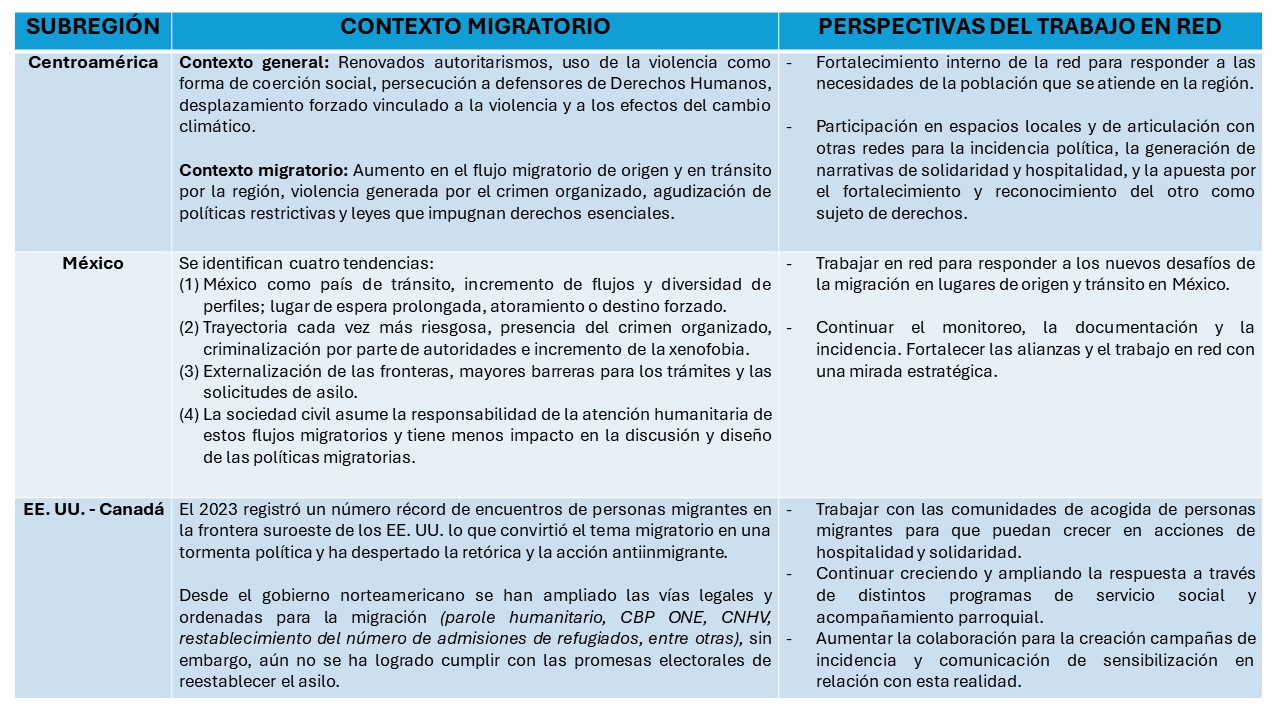
Jesuit Network with Migrants Central America and North America (RJM CANA) shared the first four months of the year report (January – April 2024): "They have been months of a lot of work to face the challenges in the migration context characterized by an increase in the migratory flow in vulnerable conditions throughout the region, however, also These have been months in which the fruits of networking have been confirmed".
On Wednesday, April 10, the European Parliament voted on the European Pact on Asylum and Migration. JRS Europe directors jointly opposed the pact and urged European institutions to reject it: "We cannot support a system that will allow the systematic detention of thousands of people, including children, at the EU external borders."
The Cartagena Declaration, adopted in 1984, emerged in response to the growing displacement crises in Latin America. Its importance lies in its expanded approach to defining a refugee, recognising the causes of displacement beyond armed conflict events. Despite progress in these 40 years, implementation challenges of the recognition criteria and the commitments made in the adopted plans persist.
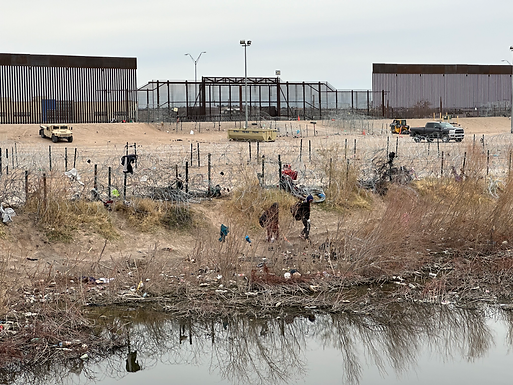
This story narrates the spontaneous act of hospitality leading to a community effort to support a migrant family's journey. It illustrates the transformative power of personal compassion amidst global migration challenges.