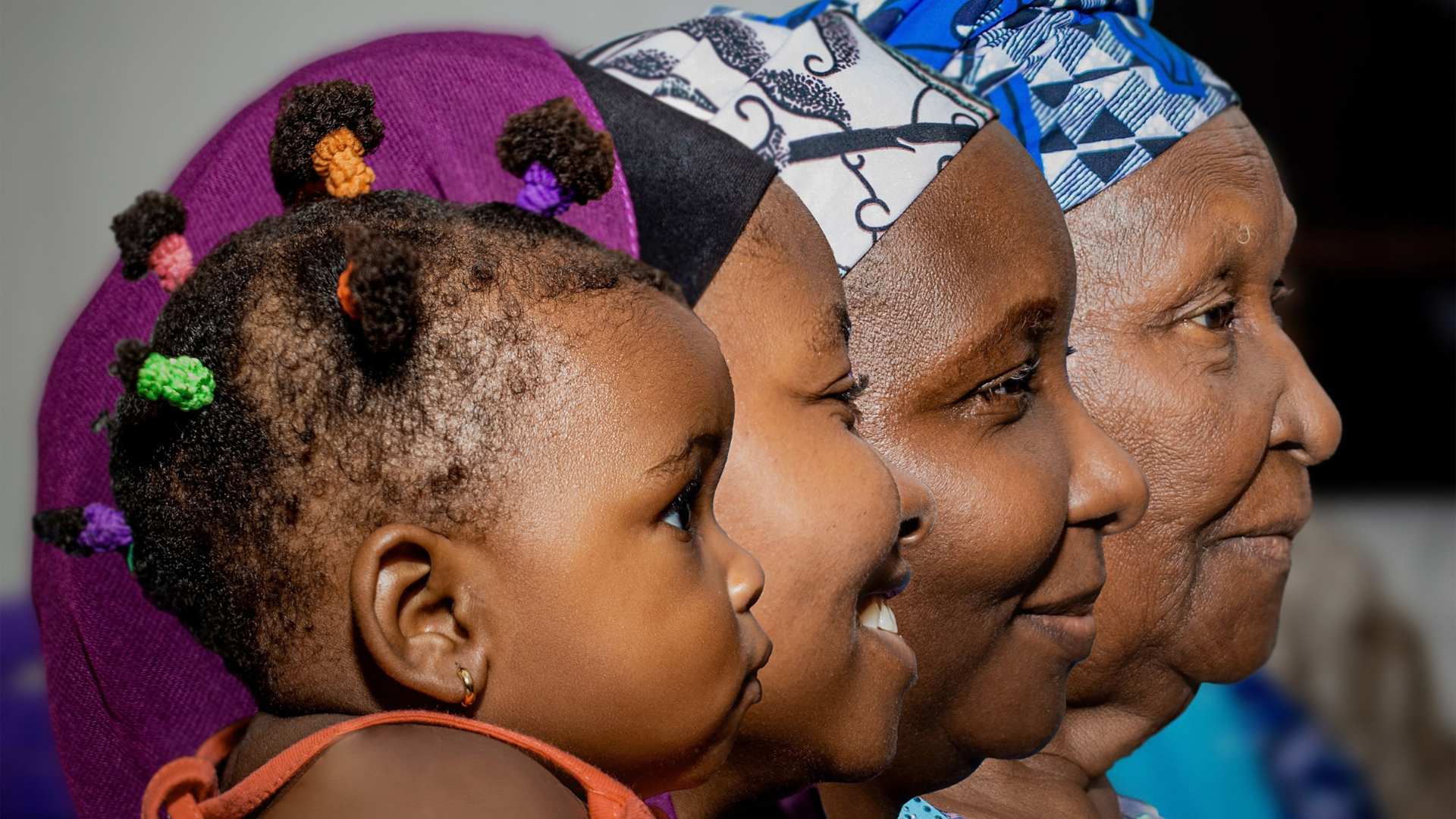
Lebano – Jesuits Make Migrants Feel Like Home in Beirut
Driven by poverty and conflict in their homelands, some 250,000 people from the Philippines, Ethiopia, Ghana, Nigeria and Sudan have immigrated to Lebanon. Nearly 95 percent of them are women, and most arrive having been recruited by Lebanese agencies that contract domestic workers in African and Asian countries.
Migrant workers in Lebanon are employed under the kafala (sponsorship) system, which links a worker’s legal status to their employer. Because they are not Lebanese nationals, they are not protected under the country’s labour laws.
Afro-Asian Migrant Centre
On Sundays, many of them gather at the Jesuit-run St. Joseph’s Church and afterwards go upstairs to the Afro-Asian Migrant Centre to meet up with their friends. There they spend their day together, having fun, sharing a meal and being spiritually nourished in their common Catholic faith.
The Centre was established at St. Joseph’s in 2000, by an American Jesuit, the Rev. Martin McDermott, now 86. He has been working with migrants since the early 1980’s, in partnership with a Dutch Jesuit, the Rev. Theo Vlught, who recently returned to his homeland at the age of 90 and deceased on January 3th.
But Father McDermott is not working alone in providing pastoral care to migrants. The Jesuit-run Centre he founded forms part of a pastoral care committee, established by the Assembly of Catholic Patriarchs and Bishops of Lebanon, for migrants throughout the country. The charity of the Catholic churches in Lebanon, Caritas Lebanon, operates safe houses and shelters for migrants in distress. And since September 2017, the American Jesuit has been joined in his work at St. Joseph’s by the Rev. Henry Ponce, S.J. — the first time the Jesuit Province of the Philippines sent one of their own priests to the Middle East. Read more…

Related Posts:
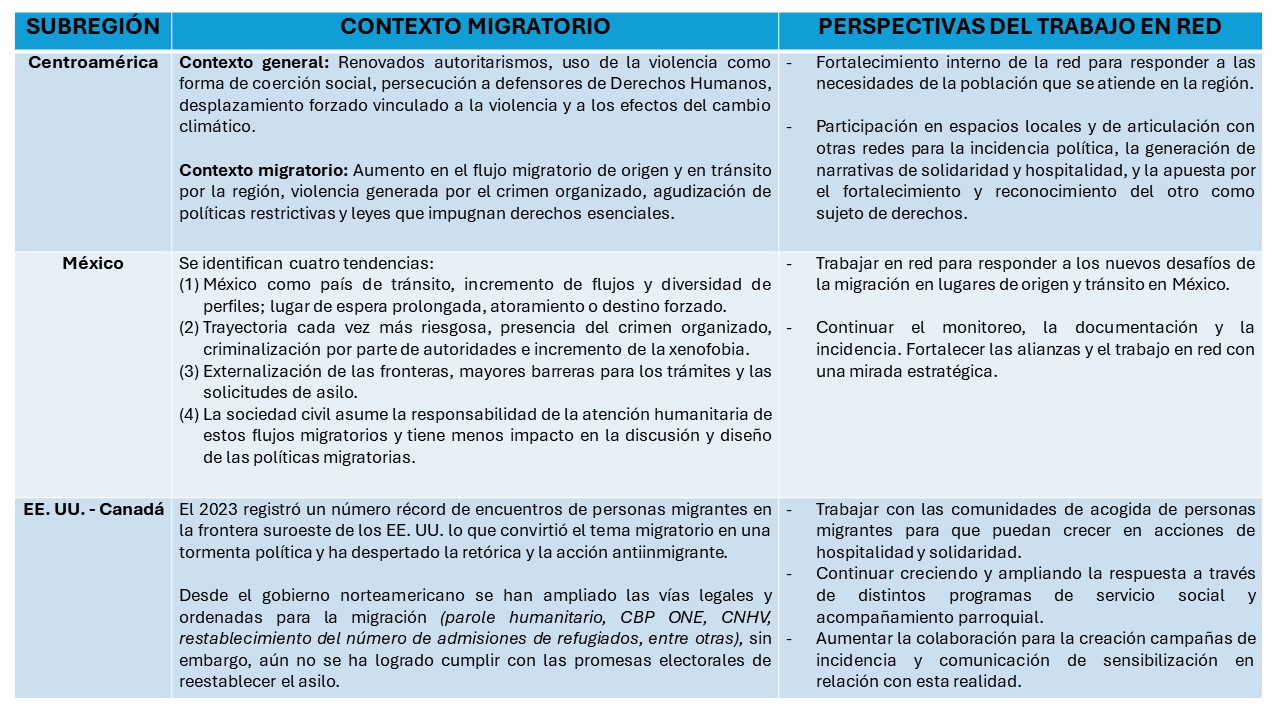
Jesuit Network with Migrants Central America and North America (RJM CANA) shared the first four months of the year report (January – April 2024): "They have been months of a lot of work to face the challenges in the migration context characterized by an increase in the migratory flow in vulnerable conditions throughout the region, however, also These have been months in which the fruits of networking have been confirmed".
On Wednesday, April 10, the European Parliament voted on the European Pact on Asylum and Migration. JRS Europe directors jointly opposed the pact and urged European institutions to reject it: "We cannot support a system that will allow the systematic detention of thousands of people, including children, at the EU external borders."
The Cartagena Declaration, adopted in 1984, emerged in response to the growing displacement crises in Latin America. Its importance lies in its expanded approach to defining a refugee, recognising the causes of displacement beyond armed conflict events. Despite progress in these 40 years, implementation challenges of the recognition criteria and the commitments made in the adopted plans persist.
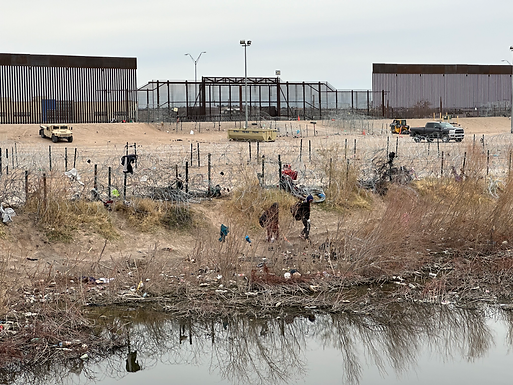
This story narrates the spontaneous act of hospitality leading to a community effort to support a migrant family's journey. It illustrates the transformative power of personal compassion amidst global migration challenges.
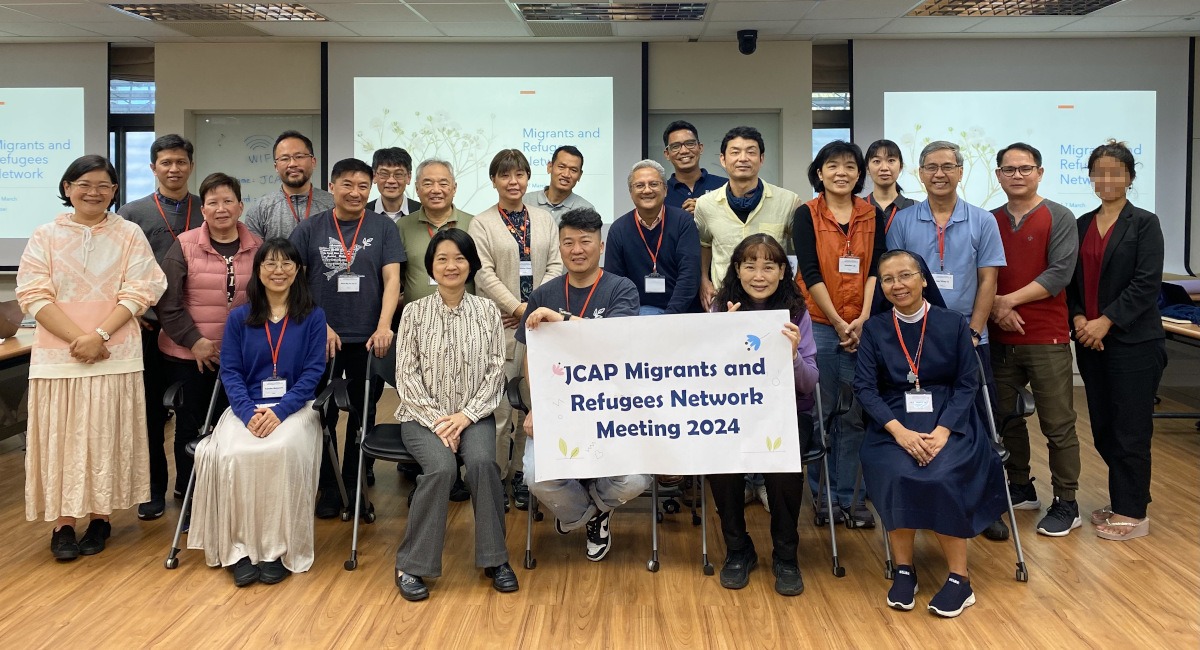
The Migrants and Refugees Network in Asia Pacific gathered to address migrant and refugee challenges, guided by collaboration, prayer, and Ignatian spirituality principles. Discussions ranged from updates on regional migrant situations to Taiwan's progressive immigrant response, culminating in the finalization of a five-year action plan highlighting the network's dual mission of support for both migrants and its members.
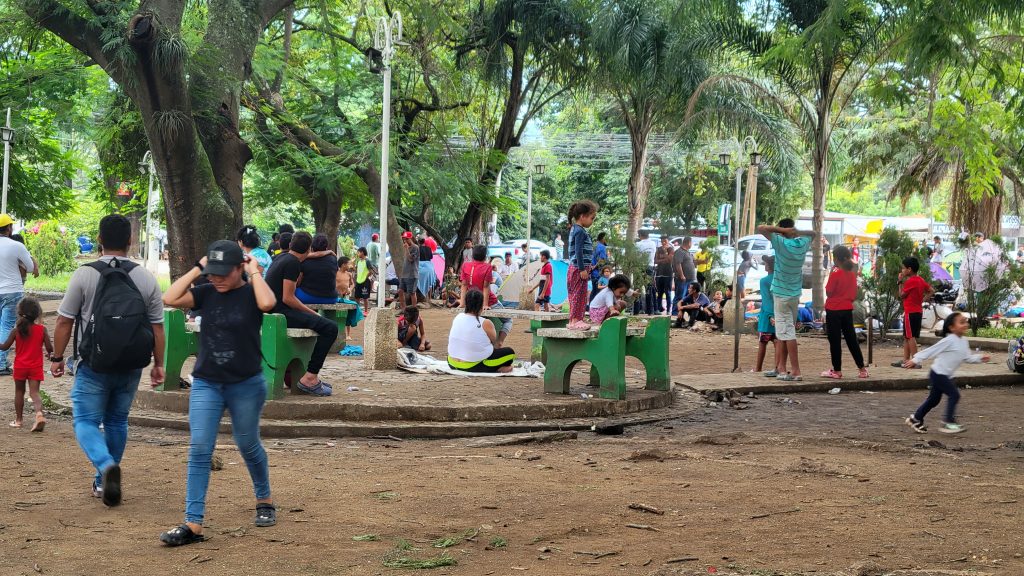
This first publication of 2024 provides an overview of the latest data, changes and trends in the context of most of the region's countries (Panama, Costa Rica, El Salvador, Honduras, Guatemala, Mexico, the United States and Canada).