Strengthening community management of water, a passion that inspires
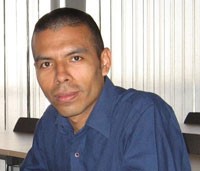 Pedro Antonio Ojeda Pinta Social Promoter, IMCA
Since 2006 I have been
deeply involved in the work of Instituto Mayor Campesino (IMCA-founded in 1962,
a Jesuit centre at the service of rural communities in Colombia) in Valle de
Cauca Department in southwest Colombia. This work, focused on strengthening the
community's management of water, has become my passion. Throughout the past six
years of my involvement with this initiative, I believe I have contributed in
many ways, particularly in the development of social organisations. In my
experience managing water supplies, particularly of campesino populations, in
rural areas at municipal and departmental levels, my colleagues and I have
created a system which has become a point of reference for similar subsequent
processes consolidated in other parts of the country.
The most significant part of this process has been learning from the knowledge and experiences of those who have worked tirelessly, struggled and committed themselves completely, so that thousands of people (children, adolescents, adults and older people) could gain access to water, at least enough to run their small farms and meet their personal needs.
Notwithstanding the importance of community management of water, instead of strengthening these local organisations, government agencies have for many years been setting a series of regulatory requirements. For the most part respecting these regulations is beyond the capacity of these community water groups and associations, unable to meet the many challenges which need to be resolved at the level of micro-watershed, infrastructure, and organizational and administrative capacity.
It is these and other challenges which have fostered my passion to work with rural water management community groups and associations. Therefore, I have become involved in the process of defending and strengthening community management of water. In this context, IMCA has allowed me to become involved in processes defending and strengthening of community management of water at local, municipal, regional, departmental and ultimately national level.
I believe this interest is not only due to the particularly circumstances at this moment in time. Since I was a child I have been fortunate enough to understand the process relating to the construction and management of water supply; for this reason my work and efforts are focused on the human right to water as proclaimed in by the United Nations; the right to water is and will continue to be the issue of survival and self-sufficiency which significantly effects the well-being of rural communities in my beloved country. Without doubt the challenges facing this process are enormous, but where there is the will, cooperation, empowerment and joint work, each of these challenges will be overcome.