My Engagement In Social Issues: An Essential Component Of My Faith
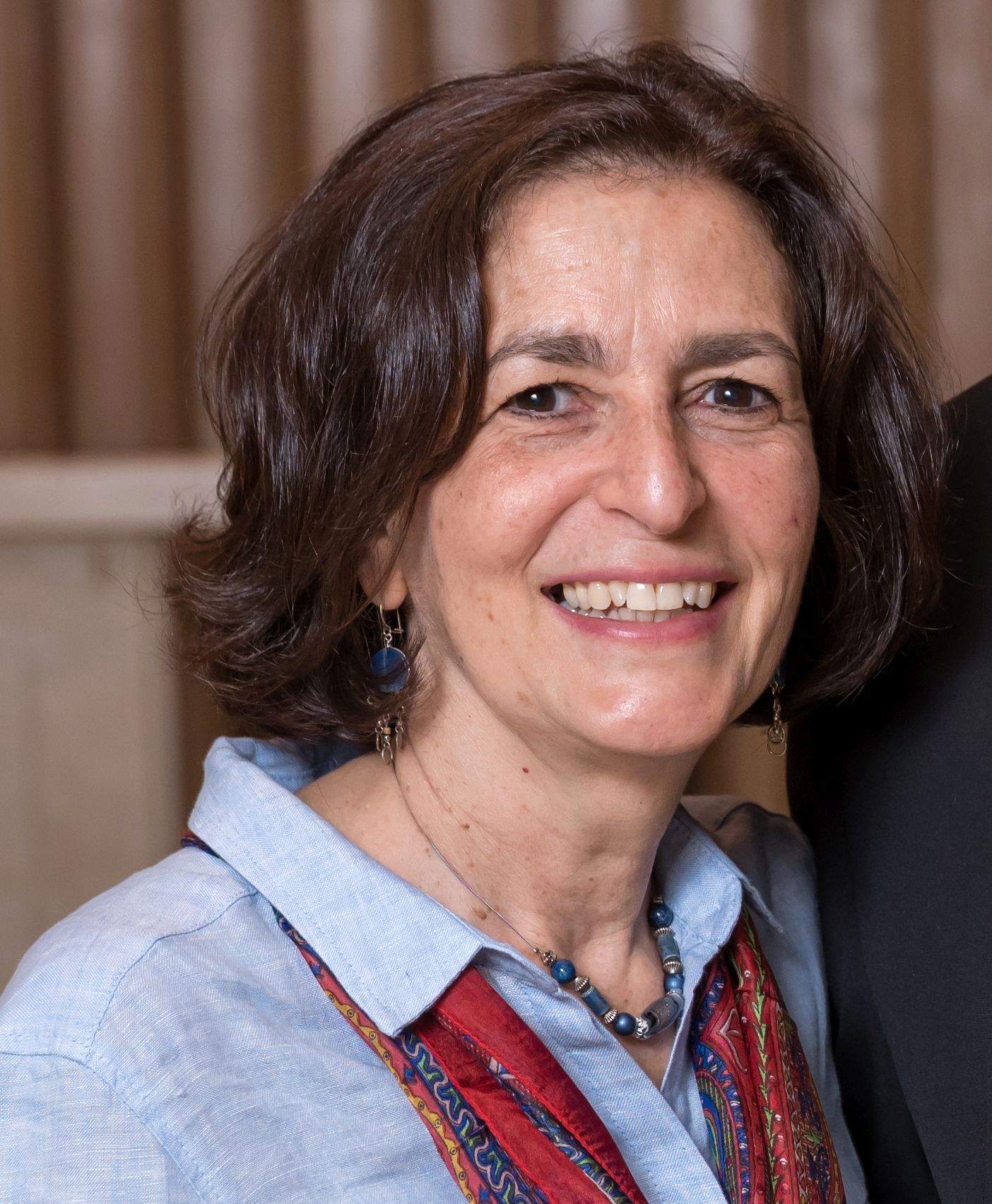 Jenny Cafiso
 Executive Director Canadian Jesuits International (CJI)
The roots of my story in the social apostolate are found in my experience growing up as a teenager in Italy. I was very involved with the youth group in my parish. The social, political and religious context in the country at the time was one of great social upheaval, with the presence of strong social movements, labour conflict, a strong communist party, a post- Vatican II Church, the influence of Liberation and of Political Theology. It was there that I first understood faith and justice as being inextricably linked. Our youth group of over 80 people met almost every day under the guide of a very forward thinking pastor, to read the psalms and to discern how our faith called us to build a more just world. We were inspired by Isaiah 58: “Is not this the sort of fast that pleases me: to break unjust fetters, to undo the thongs of the yoke, to let the oppressed go free, and to break all yokes”
When I
arrived in Canada, I had a keen desire to live out my faith with a commitment
to justice. This led me to a very active involvement with a number of
organizations both religious and secular working on social change. This
commitment also affected the direction of my university studies.
While still in high school I was involved with the Cesar Chavez California grapes boycott campaign, then I joined the collective of the Latin American Working Group (LAWG) of which I was a member for over a decade; I was also actively involved with a diocesan youth program called Youth Corps; with the Student Christian Movement; and with the Jesuit Centre for Social Faith and Justice where I was a member of the editorial committee of the Central America Update and the Moment initiative.
I considered my engagement in social issues an essential component of my faith. I was and continue to be deeply convinced that our faith calls us to have a preferential option for the poor. This means to always seek to understand the world from the perspective of those who live in the margins, and to work actively for social and political change to transform oppressive structures. For me, my faith was a call to be radical.
In university I studied what was then called Sociology of Underdevelopment, as well as Theology, and years later I did a Master’s degree in international Political Economy. My first experience overseas in the Dominican Republic confirmed my deep desire to work for social justice and international solidarity. Soon after graduating I started to work with the Canadian Catholic Organization for Development and Peace where, as I always liked to say, I was getting paid to do what I would have done as a volunteer.
But I still felt this deep desire to do more, to be closer to people who live on the margins, to learn from them, to become their friend. This led me to go to Peru to live in a pueblo joven and work for a popular education centre called TAREA- Asociación de Publicaciones Educativas, as well as being involved with a basic Christian Community in my parish. Years later, I worked in Rome with the Jesuit Refugee Service (JRS) for 8 years and there started my formal employment with the Jesuits which continues today with the Canadian Jesuits international.
I have definitely and unequivocally felt the presence of God among the poor in the slums of Peru, among the refugees and forcibly displaced people in Africa, Asia, and Latin America, and with the people who have dedicated their lives working for social justice, sometimes even risking and losing their lives. God has been present in the many martyrs who have worked alongside us in our journey.
My world view and my faith have been enriched by the experience of people who, while living on the margins of society, excluded and derided, have a strong commitment to the common good and to their communities, a capacity to build strong social organizations, a deep faith in a God of life and love, leadership capacity, and a clear project for their lives and society. In Peru, my regular meetings with a Base Christian Community gave new meaning to the Gospel and to my faith. I was also enriched by the rich intellectual and religious context where we had frequent opportunity to be, reflect and learn from people like Gustavo Gutierrez and other leaders who challenged me to a new understanding of the “preferential option for the poor”.
They have inspired me with their courage, their capacity to forgive, their laughter and their faith, and their belief that a better world can be built. It is easier to get depressed about the world and the Church as a privileged person in the comfort of a rich country. But in those very places where there is suffering, hurt and violence, I have felt the presence of God and the hope of a new future.
This continues today. My work and friendship with the many people I am associated with through CJI, whether it is in Honduras or South Sudan or Mexico or Darjeeling, inspire me and affirm my belief in a God of life and justice. God is there where the poor are, where people have suffered, there where life is not surrounded by privilege, but it is considered to be a privilege.
Yes, I feel desolation at times and I do so the more removed I am from people who are struggling. Privilege takes us away from God. The current social and political situation globally is a source of desolation. The forces of exclusion which seek the concentration of wealth in the hands of a few no matter what the cost to people and the environment, are a source of desolation, and so are the systemic racism and gender based exclusion. The deep amnesia that many of us seem to live in, electing with our own free will people who govern for the benefit of the few, leads me to lose faith in human nature.
I feel desolation when confronted with a Church that barricades behind rules, edicts, exclusions that seem to be so far removed from the pain, suffering and dreams of the people. I know that a change will require courageous and deep changes, and I ask if the Church Is capable to do so . I also experience desolation at my own half measures. I feel that the zeal and radical commitment that I had when I was younger, has been diluted somewhat – there is a feeling that I could have done more to live out my faith.
I am grateful for the privilege I have had to be in places where very few people go, where suffering and joy, hope and despair coexist. I am grateful for the privilege of having met people of courage, with insights, who live life of meaning and in turn have given mine meaning. It is a privilege that I have had, in part by choice and other i circumstance and luck. It is privilege that few have and that carries with it a responsibility. It is a responsibility that continues to motivate me to always seek the magis.