A Life of Commitment to the Social Apostolate in Venezuela. Interview with Fr. José Ignacio Arrieta sj
 Luis Carlos Díaz Centro Gumilla Venezuela
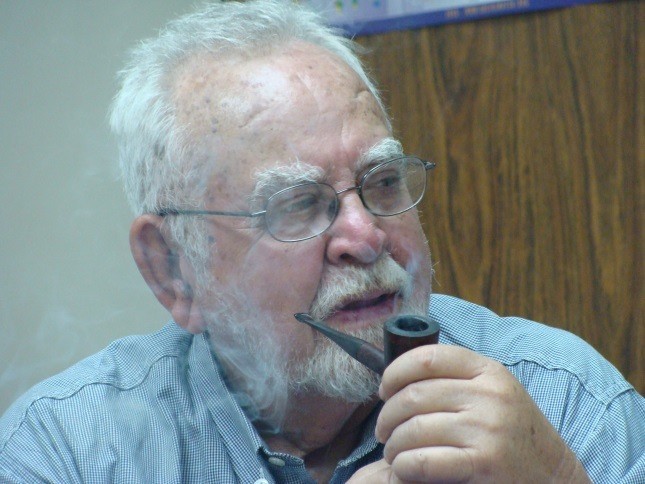
Father José Ignacio Arrieta is presently living in the province infirmary of the Jesuits of Venezuela. Now 81 years old, he recalls for us the process by which the social sector took shape in Venezuela around the work of Centro Gumilla:
We founded Gumilla in 1968. During those years the two Gumilla groups, one in Caracas and the other in Barquisimeto, spontaneously started to discuss social questions and to act on them.
In Barquisimeto we were deeply involved in accompanying the organizing activity of the coffee farmers in the rural areas, while in Caracas we were helping out with popular education and working with specific groups like the trade unions. The creation of the social sector of the Society of Jesus came later, because the social sector of the CPAL still did not exist.
The social sector
Centro Gumilla was the center of activity and our base of operations. In the beginning Father Alberto Micheo placed much emphasis on the specific, concrete social agenda of the Center, but with the arrival of Fathers Pedro Trigo, Eduardo Ortiz, and Carmelo Vilda we saw the need to incorporate also the theological dimension. We remained concrete in expressing our social and economic vision, but we also saw the importance of spirituality. In those years that meant accompanying the people in their daily lives.
The Gumilla Center dedicated time to giving classes in the Universidad Católica Andrés Bello, and our research was published in the SIC journal, which was founded in 1938 and adopted by the Center—it is still active. Our presence in different places has provided us with abundant material for our work, which included helping the union movement, researching social and economic questions, and analyzing the political situation of the country. We were initially very traditional in the work we did; it was only after the death of Manuel Aguirre (1904-69) that we turned to an even more progressive perspective.
The social doctrine
Two texts were published in SIC journal during the decade of the ’60s that deserve mention. They were commentaries on the book by Salvador Freixedo titled, My Church is Asleep(1968). Our criticism of the prevailing model brought us to the point where we were obliged to submit to the Provincial’s review every issue of the journal before it went to the printer.
With the publication of the Document of Medellín (of the Second General Conference of Latin American Bishops, held in 1968), a clear new vision began to take shape, above all in the documents concerning peace. As a result, we were able to orient our work more directly toward the social.
It is evident that all the work of the Gumilla Center, as well as the work of the social sector of the Society which was just beginning, was following the guidelines of this new perspective of the Church’s social doctrine. I believe we were leaders in this process. We advocated more open-mindedness as regards working with unions and community organizers. We also saw the need to develop the best of Christian social and liberal thought in collaboration with the Universidad Católica Andrés Bello.