
Toward an Economy of Reconciliation
Artificial intelligence makes Matthew Carnes’s proposal to move towards an economy of solidarity and reconciliation, grounded in the dignity of every person and the common good, especially urgent. Faced with a technological transformation that renders precarious work invisible, perpetuates discrimination, and threatens to concentrate the benefits of increased productivity, the text invites us to ask not only how much value innovation creates, but who shares in that value, who is excluded, and what conditions enable human flourishing. Lifelong learning, social protection, and the participation of those displaced by these changes emerge as essential conditions if artificial intelligence is to serve decent work rather than an economy without workers.
This perspective takes on a distinctly socio-environmental dimension when we recognise that artificial intelligence is not immaterial: it depends on energy, infrastructure, minerals, and labour supply chains whose costs are often borne by impoverished communities and territories in the Global South, as the case of the Democratic Republic of the Congo so starkly illustrates. An economy of reconciliation therefore requires us to make these interdependencies visible, repair social and ecological harm, ensure transparency across supply chains, and place at the centre those who have been treated merely as resources. It is through this lens that we republish Carnes’s article, whose call to bring together economic creativity, distributive justice, care for our common home, and the agency of those who have been excluded offers a fruitful framework for discerning artificial intelligence through the lens of socio-environmental justice.
The Editor.
Solidarity and shared purpose – both within and across nations – seem to be in short supply in the current world economy. Nevertheless, the current state of affairs may offer an important opportunity for thinking in creative, new ways about what an economy based on solidarity and reconciliation might entail.
The year 2016 saw an unprecedented swing in views of worldwide economic relations; at no time in the last seventy years has the basic orientation of the economy been more widely questioned. With the vote of the United Kingdom to leave the European Union and the rise of nationalistic political contenders in many countries, the seeming consensus toward a liberal capitalist model of economic relations – in which open trade and free competition was expected to yield shared prosperity – has shown fundamental fissures. Longstanding concerns about equity and inclusion have been joined by a growing rejection of the cosmopolitan worldview that liberalism seemed to embrace. For the first time, perhaps, thinkers from across the political spectrum have come to see the regnant economic model as broken in either big or small ways.
The liberal model held sway for nearly all of the postwar era, promising to foster efficiency and productivity, and to bind nations together through trade agreements and fluid financial flows. This open model delivered significant growth: at no point in human history have as many people moved out of abject poverty. This is a massive accomplishment. But the model did not benefit all people equally. Nor did it ensure their stability in better circumstances. Instead, the separation between the most prosperous and least prosperous members of society has grown in the majority of countries around the world. Middle-class status has proven remarkably tenuous, with frequent layoffs and wages subject to volatility and the loss of value through inflation. Thus, the economy that produced such incredible growth was accompanied by a growing social breach of inequality.
One response has been growing nationalism, emphasizing a perceived need to protect national interests over collective interests and, in many cases, directing resources toward majority groups at the expense of minorities. Seeing other nations as rivals, and migrants from those nations as less deserving and in some ways suspect, this instinct seeks to go it alone and take care of oneself (or one’s nation) first. It is individualism writ large, at the national level, and it replicates itself in individualism writ small, at the personal and group levels for ethnic and religious majority populations. The result is an ever greater fracturing and fragmentation of social bonds both globally and locally.
Yet an alternative response is to propose an economy of solidarity, and to achieve it, an economy of reconciliation. This is the response proposed by the 36th General Congregation of the Society of Jesus, and by Pope Francis, and it both builds upon, and challenges, the existing liberal economic model. It affirms the efficiency and productivity of individual effort in the market, while also noting the essential role for states and international cooperation in fostering inclusive participation in economic and social life. It links care of persons and care of our common home, the earth, together in an integral way. And it calls for a concerted effort not just to make future growth more equitable and sustainable, but to repair the broken relationships that currently exist. This is a bold and far-reaching project, and it will admittedly need much further elaboration than can be sketched out here. But these brief lines here hope to make a modest contribution to that effort, and to spark thinking and creative action to address the glaring divisions of our age.
What might an economy of reconciliation look like? Most fundamentally, it is based on twin foundations. The first is the dignity and worth of each human being, created by God and intended to flourish through the use of each person’s unique gifts and abilities. And the second is the affirmation that such flourishing occurs in what is called the common good. As developed richly in Catholic social teaching, the common good is more than simply the summation of the individual goods enjoyed by various members of society. It necessarily involves a social good, the good of the society as a whole, in which the needs of the poorest in society, as well as the well-being of the environment and the well-being of future generations, are pursued simultaneously.
In many ways, this vision is consistent with the postwar liberal economic model. Individual creativity, initiative, and work are valued both as ends in themselves and for the positive contribution they make to overall growth and productivity. And likewise, the gains that come through exchange and collaboration are seen to play a crucial role in promoting shared growth and a shared sense of community at the national and international level. Societies that enable all their members to contribute, as possible given their age and health and other conditions, reap gains in not just their bonds of comity but also in their bottom line output, because they exclude the contributions of no one.
But an economy of solidarity and reconciliation also recognizes that human beings are by nature diverse, and by social construction they are unequal. They are born with varied gifts and they grow up in conditions of widely divergent opportunities and resources. This asymmetry, which has been reified in longstanding social structures, has been further exacerbated in the last three decades through an inequitable distribution of capital. Wealth has become concentrated in the hands of a small minority of the world’s population; nearly half the world’s population has no assets to call their own. In addition, the burden of the use of the earth’s resources has been uneven, with some experiencing the effects of environmental degradation, climate change, and pollution far more acutely than others. These asymmetries have often built upon, and reinforced, existing social hierarchies of race, ethnicity, gender, and religion. And finally, these hierarchies are reflected in, and reinforced by, unequal relations of power in the political sphere.
An economy of solidarity and reconciliation thus must seek to respond not to an ideal or hypothetical set of social relations, but to the current reality of widely divergent starting points and outcomes. To do so, it necessarily recognizes that an active effort must be made to address these asymmetries; the market model, of itself, has not shown an ability to sufficiently ensure access or opportunity to all human beings. Some further action – driven not just by the self-interest of those with resources, but by a decisive “preferential option” – must be undertaken to actively promote the opportunities and well-being of those whose birth or
circumstances have hindered or marginalized their well-being. And among these, particular attention must reach out to those who have not shared in the prosperity of recent years, and especially those that have been dislocated or harmed by it.
Some elements of an economy of solidarity and reconciliation are already well recognized, but they require significant expansion and improvement. Basic health care and quality education are two of the best, proven investments societies can make to increase the health and well-being of their citizens. In particular, preventative health care services, such as immunizations and regular check-ups, especially for expectant mothers and young children, greatly increase the likelihood of healthy births and enhance physical and cognitive development. Adults, too, benefit greatly from ready access to doctors for preventative services and counseling on diet and exercise; they stay healthier longer in life and are less likely to suffer catastrophic health events and need for extended care. They are able to lead productive lives and contribute to the needs of their families. Yet too many countries are either unable, or unwilling, to provide these services. An economy of solidarity recognizes that health care is a lifetime need that is difficult, if not impossible, for an individual to provide for herself or himself. Rather, shared mechanisms of insurance – often coordinated or managed by the state – are necessary so that all can be adequately protected and enabled to realize their full potential.
Similarly, education is central to an economy of solidarity. Such education needs to be universal, of high quality, and attuned to the needs of local economies. It also should draw on, and encourage, the cultivation of the best of our humanity, embracing not just productive skills but also the wonders of the arts and sciences, sparking our curiosity and intellectual wonder. And increasingly, education will be a life-long need. As markets rapidly shift and new jobs are both destroyed and created, individuals need opportunities to expand and enhance their skill sets during their lifetimes. New technologies are forces for tremendous creativity, but they also bring disruptions and displacement. An economy of solidarity will thus take into account education not only for the young, although this has a special priority, but also seek to expand opportunities for mid-career and older workers to pursue new skills and learning and to grow intellectually throughout their lifetime.
The recent experience of several countries around the world has pointed the way toward policies that can increase the use and benefits of both health care and education. First, states have made productive use of carefully targeted and designed transfer programs. One strand of these, called conditional cash transfers, provide small monthly cash payments to families that ensure their children receive regular medical care and immunizations and that keep their children enrolled and present in school. These payments offset the cost of time or work forgone in attending to doctor’s appointments or going to school, and they ensure that the costs of basic supplies like uniforms and notebooks do not prevent a child from attending school. They have been shown to increase the number of years the students stay in school (rather than prematurely entering the workforce), increased the nutrition level in the family, and they are associated with improved health throughout childhood. And they do so at a relatively low cost, especially when compared with spending on traditional social programs.
Yet the state is not the only actor to play an important role in the economy of solidarity and reconciliation. Private sector actors and non-governmental organizations have embraced a variety of credit solutions that make financial resources available to small producers who would otherwise be left outside the banking market. These have unleashed incredible creativity and productivity, in an entrepreneurial spirit, for people whose lives had been on the economic margins, especially women. Expanding access to credit, and providing financial and business education – as well as legal protections against predatory lending – for those
who make use of it, has allowed a new dynamism to emerge. It has the potential to do even more.
But even more radically, an economy of solidarity and reconciliation may very well require a further step. It might involve a need for an explicit recognition of, and even apology for, the significant harm that has been done to social relations and to the planet in the name of the economy. If our world is indeed more fractured than perhaps at any other time in recent decades, then a concerted effort must be made to address that fracture (or set of fractures). And like all meaningful reconciliations, it will require a firm commitment to make amends. This need not be a kind of finger-pointing or vilification of any particular group. Instead, it would involve a solidarity and shared effort to ensure not just the inclusion, but the centrality, of those previously left out or displaced.
An economy of solidarity would actually place these people and the environments in which they live at the center of economic discussions – most notably women, the indigenous, and refugees. Indeed, Pope Francis has highlighted in Laudato Si’ that such people should be the protagonists and “principal dialogue partners” in addressing the economy. Real choices, with real costs, to address their needs and the needs of our planet, would take precedence over others that could benefit those who are already secure and healthy. Shared sacrifice, and even a kind of reparations, might very well be necessary to achieve social reconciliation and to together restore and replenish our planet’s ecosystem. And it is likely that consumption will need to be modified so that our use of natural resources is sustainable for future generations.
An economy of solidarity and reconciliation would thus mark an important departure from much of the existing liberal model and its excesses. While preserving an appreciation for human work and creativity, it necessarily adds a sense of responsibility to ensure that all people – who are born diverse and shaped by their social circumstances – have access to the opportunity to develop their bodies and minds and families fully. It sees both the private and public sector, as well as civil society, as essential to this effort. And it adds a crucial additional task: to address the broken world we have inherited, both socially and environmentally. The test of an economy of solidarity and reconciliation will be seen in its ability to respond to the real needs of a new set of protagonists. Their voices will create new opportunities, and will help set the tone for a new model of economic life.
Original English
Author
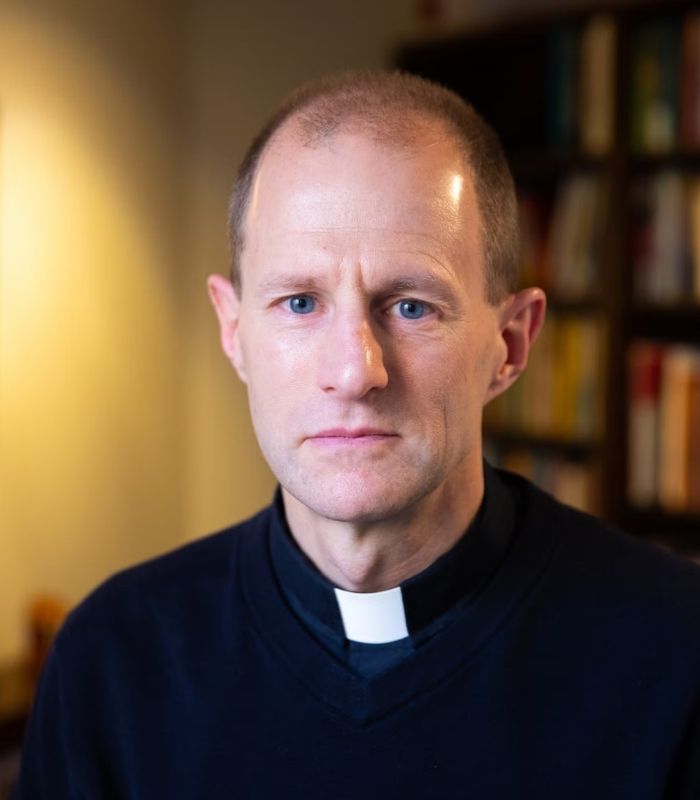
Fr. Matthew Carnes, S.J., serves as Vice President for Mission and Ministry at Santa Clara University, as well as Executive Director of the Ignatian Center for Jesuit Education and Professor of Political Science. In this role, he is charged with strengthening and promoting the University’s Jesuit Catholic mission and character in ways that are bold, inclusive, and reflective of the rich diversity of the University community.
Prior to joining Santa Clara University, he was an associate professor in the Department of Government and the Edmund A. Walsh School of Foreign Service, and he served as Vice Dean for Faculty Affairs in the School of Foreign Service (2023-2024) and as the Director of the Center for Latin American Studies (2016-2022).
His research examines the dynamics of labor and social welfare policy in developing and middle-income countries. A specialist on Latin America, he has conducted extensive field research in Argentina, Peru, Chile, and Bolivia, and he has worked on development projects in Honduras, Mexico, Uruguay, Paraguay, and Ecuador. He is the author of Continuity Despite Change: The Politics of Labor Regulation in Latin America (Stanford University Press, 2014), and numerous journal articles.
A distinguished educator, he received three of Georgetown University’s highest teaching awards, including Georgetown College's Edward B. Bunn, S.J. Award (2017 and 2011), given by graduating seniors of the College; the Edmund A. Walsh School of Foreign Service Faculty of the Year Award (2013), given by the SFS Academic Council; and the University-wide Dorothy Brown Award for Outstanding Teaching Achievement (2011). In 2012, he was featured as one of the country's best professors in the Princeton Review's publication, 300 Best Professors.
In recent years, he has been a Visiting Scholar at Campion Hall, Oxford University (2023), a Visiting Fellow at the Kellogg Institute for International Studies at the University of Notre Dame (Spring 2009) and a National Fellow at the Hoover Institution at Stanford University (Academic Year 2011-2012).
Cover image credits: In Bolívar, entire families work in mines to make ends meet. Image: Oro Mortal / Transparencia Venezuela. Source: Freedom House. Published on 1 October 2020.
Related Posts:

Artificial intelligence (AI) is transforming the world of work on several fronts simultaneously. It alters the conditions of those who work to make it possible, often in invisible and precarious jobs; it changes hiring, organizational, and career advancement processes, where automated decisions can reproduce historical inequalities under the guise of neutrality; it heralds a new labor paradigm in which part of the economic value may grow without a proportional increase in human labor; and it transforms the way we educate professionals who will have to coexist with it, altering both teaching methods and the competencies required of graduates.
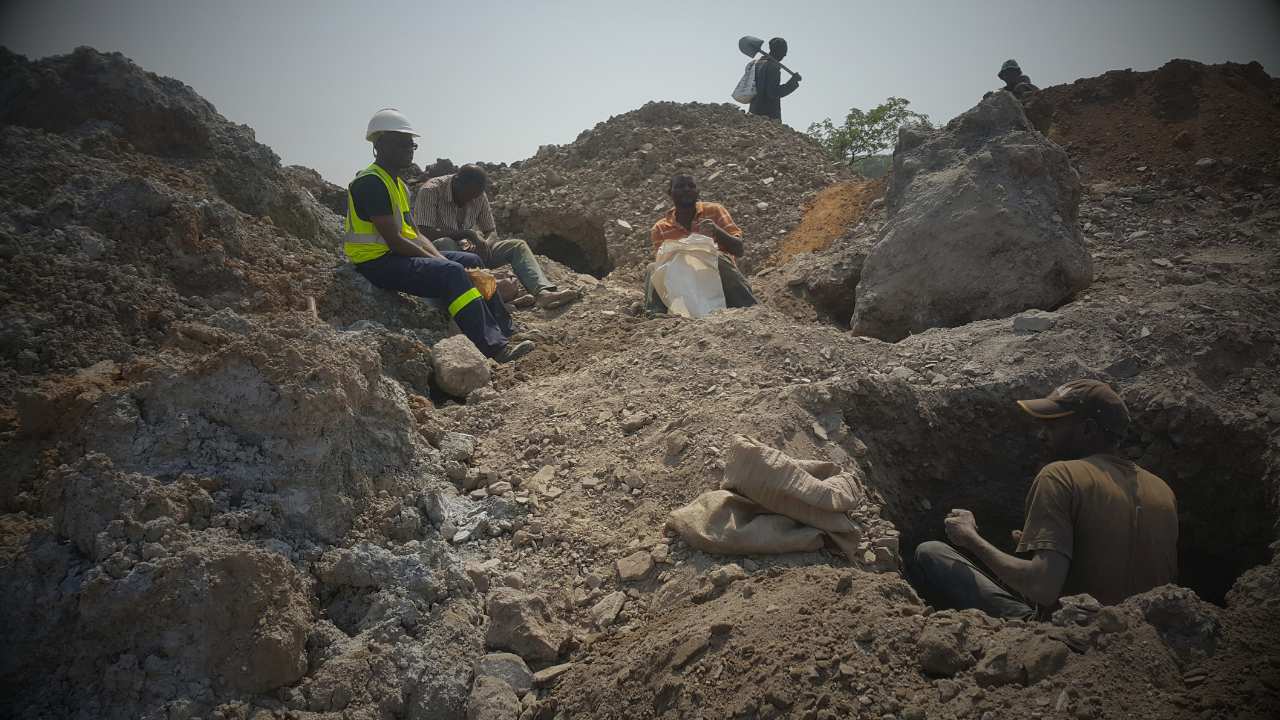
The inseparable link between those minerals and artificial intelligence haunts my daily life here. I do not approach this link through the archive, but through the ground I was born and raised on. To tell this history is not to complain about a stranger who wrecked our region; it is to take responsibility for what is happening in my country. And so, reading Pope Leo's new encyclical, Magnifica Humanitas (MH), I begin with the question that has long followed me: When will the majority of Congolese finally benefit from their own immense natural wealth, rather than paying for it with their suffering, and, too often, their lives?
The Industrial Revolution asked whether economic progress could be reconciled with workers' dignity. It also challenged the assumption that economic progress is inherently good. Can greater productivity alone be called progress if it comes at the expense of human dignity, social cohesion, or the natural world? More than a century later, artificial intelligence poses a different but equally profound challenge. Machines are no longer transforming only how we produce goods; they are beginning to transform how we think, decide, create, and even relate to one another. The question before us is therefore not merely technological. It is anthropological.
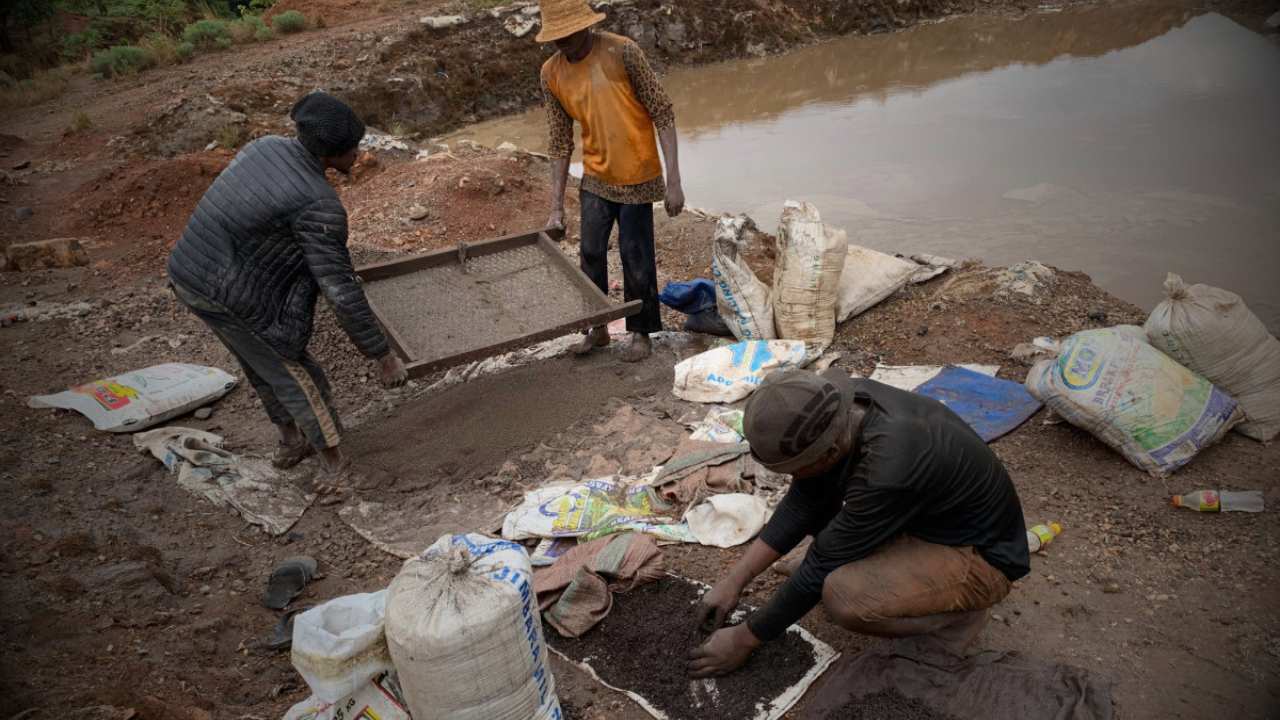
Artificial intelligence is often presented as an immaterial technology, yet it rests on a very concrete infrastructure: devices, data centers, and networks whose manufacture requires minerals such as tin, gold, cobalt, lithium, and copper. For this reason, reading AI from the perspective of socio-environmental justice means looking toward the territories where its supply chains begin: communities marked by conflict, precarious economies, ecological damage, and violations of human rights.