Latin America – LA Caravan for Integral Ecology in Extractivist Times
Voices of the victims of mining extractivism and experiences of communities in defense of the common home, travel through Europe to denounce the human rights violations that are experienced as a result of the imposition of an extractivist agenda that does not stop in Latin America.
The Churches and Mining Network has organized a Latin American Caravan for the Defense of Integral Ecology in Extractive Times, which arrived in Germany on March 20 and will travel through Italy, Belgium, Austria, ending in Spain on April 6.
The caravan will denounce human rights violations and the environmental impacts of extractivism through four concrete cases:
- Piquiá de Baxio - Brazil: iron extraction, slave labor, contamination of water sources, health indices of the population. Resistance and organization of the population has achieved the relocation to a new place called "Piquiá de la Conquista".
- Brumadinho - Brazil: toxic sludge spill that left 272 dead, in another environmental crime of the Vale company that still does not find justice. Families who have lost everything, landless and homeless farmers, displaced population.
- Putumayo, Mocoa - Colombia: mining concessions for copper extraction, in the Colombian Amazon, affecting water sources, headwaters of rivers, indigenous territories, in a territory already affected and displaced by the armed conflict.
- Suroeste Antioqueño - Colombia: around 90% of the territory is given over to the extraction of copper, gold and silver. It has annulled local productive activities, based on agriculture, exacerbated violence between inhabitants and outsiders, and occupied ancestral territories. Organization and resistance have succeeded in stopping part of the mining concession in the municipality of Jericho.

More details on these cases can be found at: Communities affected by mining in Latin America
The National Conference of Bishops of Brazil (CNBB), through the Special Commission on Integral Ecology and Mining (CEEM), and the communities accompanied by the Churches and Mining Network (IyM), through the Mining Divestment Campaign, will amplify their voices and allow "the cry of the land of the poor" to be heard (LS 49). The cry resounding from communities martyred by extractive economies and the historical violation of the Common House by mining activities calls for an urgent ecological conversion, as expressed by the Pope in the Encyclical Laudato Si.
Catholic partner organizations in Europe such as the International Cooperation for Development and Solidarity (CIDSE), Misereor (Germany), DKA (Austria), Redes, Manos Unidas and the Enlázate por la Justicia campaign (Spain) are promoting meetings with the Latin American delegation. The delegation will be in Europe promoting dialogues with the aim of reinforcing the globalization of hope and North-South co-responsibility. Meetings will be held with leaders of the Catholic Church, such as Cardinal Jean-Claude Hollerich, promoter of divestment in extractivism and president of the Commission of the Episcopal Conferences of the European Union (COMECE). There will also be meetings with deputies, civil society organizations and religious conferences.
Dialogues will be held in the Vatican with instances such as the Pontifical Commission for Latin America and the Dicastery for Integral Human Development. The agenda seeks to influence, from the testimony of the affected communities, in the European Parliament, with banks and Church organizations, on issues such as due diligence, the treaty on Human Rights and Business, the practices of financial violence, mining investments that link Europe and faith-based organizations.
The caravan will also present in Europe the event: "But let justice flow like a river", to be held this March 24 16:30-18h Central European Time (10:30 h Lima/Bogotá), where the upcoming EU directive on Sustainable Corporate Governance and environmental and human rights due diligence will be discussed.
To participate you can register at: Webinar "But let justice roll on like a river".
Source: CPAL
Related Posts:

Addressing today's environmental crisis requires educational institutions to embrace a transformative commitment. Inspired by the papal call and the framework of Integral Ecology, Jesuit universities are strengthening both their institutional practices and advocacy efforts while responding to the urgent challenge of fully integrating environmental education into their formal curricula.

Marking the 10th anniversary of Laudato si’, Pope Leo XIV sends a videomessage to the Network of Universities for the Care of Our Common Home, and encourages their synodal reflection ahead of COP30.
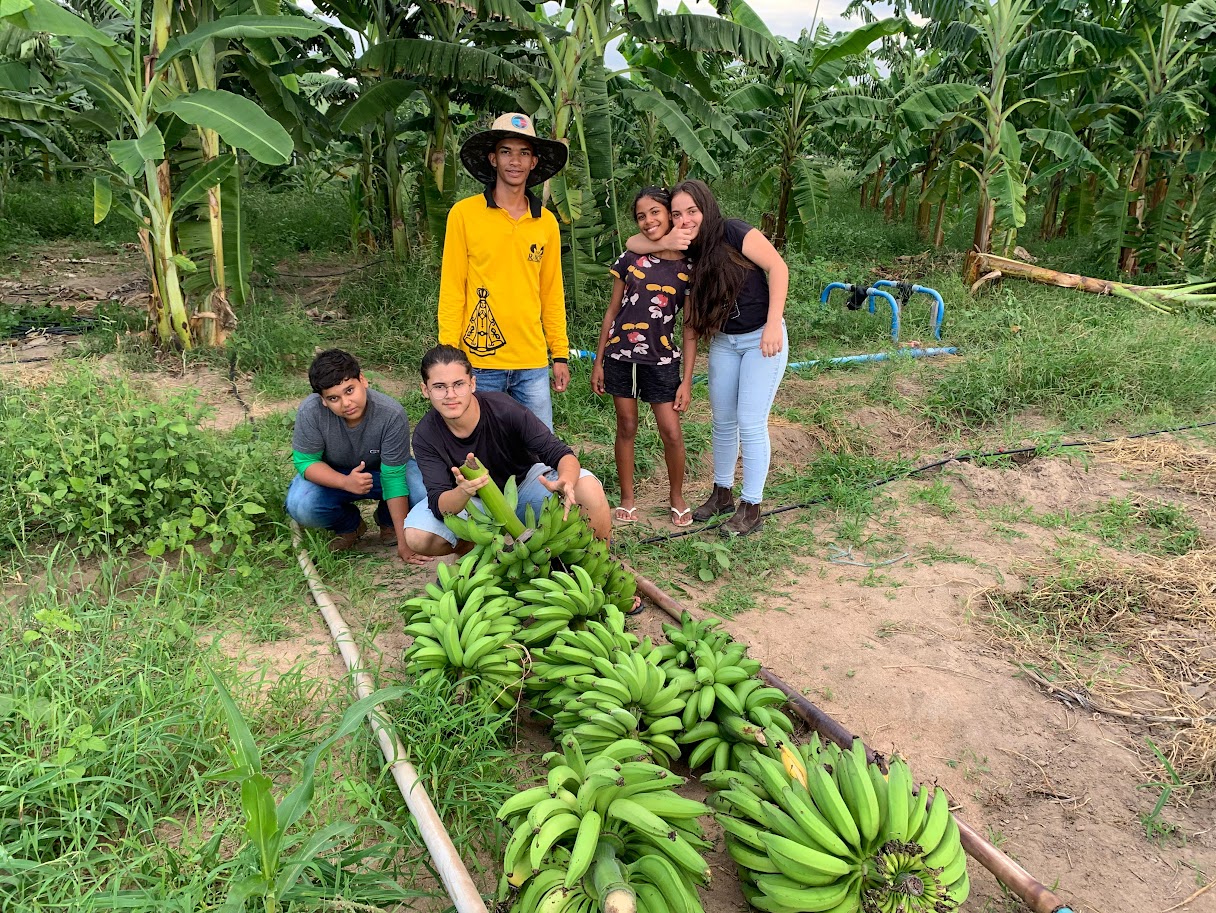
The Jaboticaba Agricultural Family School in Brazil reuses water for sustainable food production in a semi-arid region. Since 1993, it has combined agroecology with wastewater treatment to enhance food security and educate students. The project promotes environmental sustainability and aims to influence public policies in line with Pope Francis’s call for integral ecology.

It is from Latin America and the Caribbean that we present and disseminate this recently published work, the fruit of a two-and-a-half year working group that brought together Universities linked to AUSJAL and Social Centers linked to RCS (Jesuit Social Centers Network), all participants in the Conference of Provinces of Latin America and the Caribbean (CPAL). The work, which involves ten countries and 15 organizations, looks at the relationship between the environment and corruption in our continent innovatively, analyzing our challenges in the light of Integral Ecology.

Fr Roberto Jaramillo SJ, Secretary for Social Justice and Ecology (SJES) of the Society of Jesus in Rome, was in Jakarta recently. His visit provided an opportunity for dialogue with about 40 staff members of Sahabat Insan, the Jesuit centre for migrant workers. Their conversations centred around Laudato sí’s recommendation, paragraph 63: exploring local cultural wealth to develop an ecology capable of addressing the damage done to the Earth.

MEXICO CITY (OSV News) -- An Indigenous Tzotzil priest and peace activist was murdered after celebrating Sunday Mass in Mexico's southern Chiapas state, where the Catholic Church has denounced government inaction in the face of rising violence. Father Marcelo Pérez, who ministered in Indigenous regions rife with territorial conflicts and later denounced drug cartel violence, was shot dead Oct. 20 by two assailants on a motorcycle as he drove away from the Guadalupe church in San Cristóbal de las Casas, according to Mexican media reports.