Elevating Humanity: CST’s impact on my business consulting journey
Teaching Tuesdays is an ten-month formation initiative organized by the Social Justice and Ecology Secretariat (SJES) to deepen understanding and reflection on Catholic Social Teaching. As the program comes to its conclusion, participants are invited to share their insights and learning through written reflections. This article is one such contribution, written by a participant as part of completing the program, offering personal perspectives shaped by the journey of learning, dialogue, and engagement throughout these months.
Context and background
Catholic Social Teaching (CST) is often joked about as the Church’s best kept secret. Yet CST reveals itself in everyday life when one tries to live with awareness and prayerful discernment. As a Catholic husband and father of two young adults and, as a business consultant for SMEs, I’ve discovered that CST offers deep wisdom for both family and work. In this reflection, I’ll explore CST’s impact and the very tangible tensions it could create as it weaves itself into my work with SMEs, seen through the light of God’s presence in every person.
In essence, CST invites us to see the human person in God’s image: never reducing a person to a role, function, or metric. It centres every decision, structure, and action on the person’s inherent worth and the common good, guiding us to mercy, justice, and truth so that no one is marginalised but welcomed to participate fully in society.
Key CST themes like dignity of work, the preferential option for the poor, solidarity, and subsidiarity, inform how we should view business as a vocation to steward gifts responsibly, build trustworthy relationships, and share the fruits of work to elevate dignity. Subsidiarity encourages empowering local, collaborative decisions rather than centralised power. Care for creation grounds our practices in reverence and hope for future generations. Ultimately, CST invites a spiritual posture: discerning Christ in clients and colleagues, listening with humility, and acting for the common good, especially for the vulnerable.

Fair wages and a just bottom line
In my work with small businesses, I am confronted daily with the lived reality of workers who cross borders, take on demanding jobs, endure long hours, and yet cannot claim the dignity owed to every child of God. The conversation about raising wage costs, especially when the motive is not strictly economic but it is rooted in human dignity, feels almost bizarre to the business. Such situations cause great internal tensions and I ask myself, and I ask the business owner with me, questions that manifest this conflict: Why does profit sometimes seem to eclipse personhood? Why does greed appear more alluring than the hard, quiet work of humans flourishing? Why is it easier to centre the self than to place the other at the centre of our decisions?
Experience teaches that the root cause of the tension is not merely a spreadsheet issue but a spiritual and social one: people are often treated as “resources” to be utilised rather than persons to be cherished. When we meet a worker not by their name but by their role, we risk losing the light of God reflected in their face. Yet when we listen, really listen, to the stories of hardship and longing that accompany a life spent far from home, a different picture begins to form. We begin to glimpse the consequences of our choices on real, vulnerable people. Still, such glimpses do not automatically translate into wise, compassionate action.
What does CST ask of us in this tension? It asks us to keep the person at the centre of every decision, to see each worker as made in God’s image, to weigh profit not merely as a number but as a measure of solidarity with the vulnerable. It calls us to discern subsidiarity: trusting local judgment and nurturing humane structures where decisions about wages, benefits, and progression can be made with wisdom, mercy, and accountability. It invites us to steward resources so that the fruits of labour become a shared good, not a private advantage.
So I ask these questions not to close a door but to keep it open for dialogue, and gradual transformation: How can we honour the person behind the paycheck without sacrificing the viability of the business? In what ways can wages be a form of liturgy, an offering that participates in the healing of our global family? What small, faithful steps can we take today that honour dignity, strengthen community, and move us toward the common good without compromising sustainability?

Enabling Poverty?
Poverty is real, yet in many workplaces it remains almost invisible. We move through our days surrounded by colleagues, speaking about roles and responsibilities, but rarely pausing long enough to see the person behind the job title. In this way, hardship can hide in plain sight. We assume “all is well,” because it is easier than confronting the possibility that it is not.
In my work with small business owners, CST often prompts me to ask questions, questions not meant to accuse, but to awaken. If you, as a business owner, had to live on the same income as your lowest‑paid employee, how would your life look? Would you be able to sustain a dignified life, eat healthy food, afford safe housing, have a moment of rest? Could you save anything? Support your family? And if these basic needs are out of reach for someone in your employment, what unseen sacrifices are they making to survive?
These questions are not designed to provide easy answers. They are meant to stir the heart. To ask: “Am I, perhaps without meaning to, participating in a structure that diminishes the very people who support my enterprise? Is paying only what the law requires enough, if it still leaves another person in quiet struggle?”
Business owners are often thoughtful leaders who reflect deeply about consequence and risk. Yet conversations about the human consequences of economic decisions, the spiritual and moral risks, can feel uncomfortable. Still, CST invites us to sit with this discomfort, to recognise that our decisions have both practical and moral weight, and to wonder: What kind of workplace am I creating? What kind of dignity do I enable or deny?

Elevating the human vs replacing the human
When working with businesses through the lens of CST, I often return to a simple yet demanding conviction: every decision, every structure, every system should elevate the human person, not quietly displace them. Emerging technologies, especially AI, bring this tension into sharper focus. They promise efficiency and optimisation, yet CST asks us to pause and wonder: What is this technology freeing us for?
Ideally, technology should relieve people of work that diminishes their dignity: monotonous, repetitive tasks that do not draw on their God‑given gifts. When used rightly, it can create space for people to learn, to grow, to think, to collaborate, to imagine, and to use the uniquely human capabilities that machines cannot replicate. A workplace shaped by CST becomes a place where technology serves the human person, not the other way around.
But as businesses navigate these choices, deeper questions emerge, questions without easy answers. If a new technology can replace five employees at a lower cost, what does that mean for our understanding of stewardship? Is cost-reduction the only measure of a good decision? If greater efficiency helps a company serve its customers better, does that automatically make the choice morally sound?
And what about the people themselves? When an algorithm seems to perform tasks “better” than an employee, what does that say, if anything, about the value of that person? Are employees only worth what they can produce? Or are they bearers of dignity regardless of output?
From a practical consulting perspective, further questions arise. If you have already invested in these people, built relationships with them, and taught them your business—might it be wiser, more sustainable, and more human to retrain them rather than replace them?
CST doesn’t hand us easy answers. It invites us to wrestle, to hold economic and social realities alongside spiritual responsibilities. To ask not only what is profitable, but what is just. To discern how technology might expand human flourishing, rather than contribute, even unintentionally, to a quiet erosion of dignity.

Concluding Reflection
Journeying more deeply into Catholic Social Teaching has been both grace‑filled and unsettling. It invites us to see the world, and our work, through God’s compassionate gaze, revealing layers of dignity that can so easily be overlooked in the rhythm and realities of business life. CST does not simply offer principles or solutions; it awakens questions. It urges us to notice where our decisions lift people up and where they may unintentionally diminish them.
In the consulting world, this teaching becomes a steady companion. It challenges familiar practices, opens space for humility, and reminds us that every person we engage with bears Christ’s image. And because business decisions are rarely simple, CST does not hand us easy answers. Instead, it becomes the ground for continuous discernment: a way of listening to the Spirit within the complexity of profit, risk, relationships, and responsibility.
Seen through this lens, our professional work becomes more than strategy or problem‑solving. It becomes a path of faith: a place where we wrestle with competing goods, seek justice within our limitations, and try, imperfectly but sincerely, to build workplaces that honour human flourishing. In this ongoing journey, CST does not demand perfection. It simply calls us to walk forward with open eyes, a reflective heart, and a renewed desire to let our work participate in God’s healing and hopeful vision for the world.
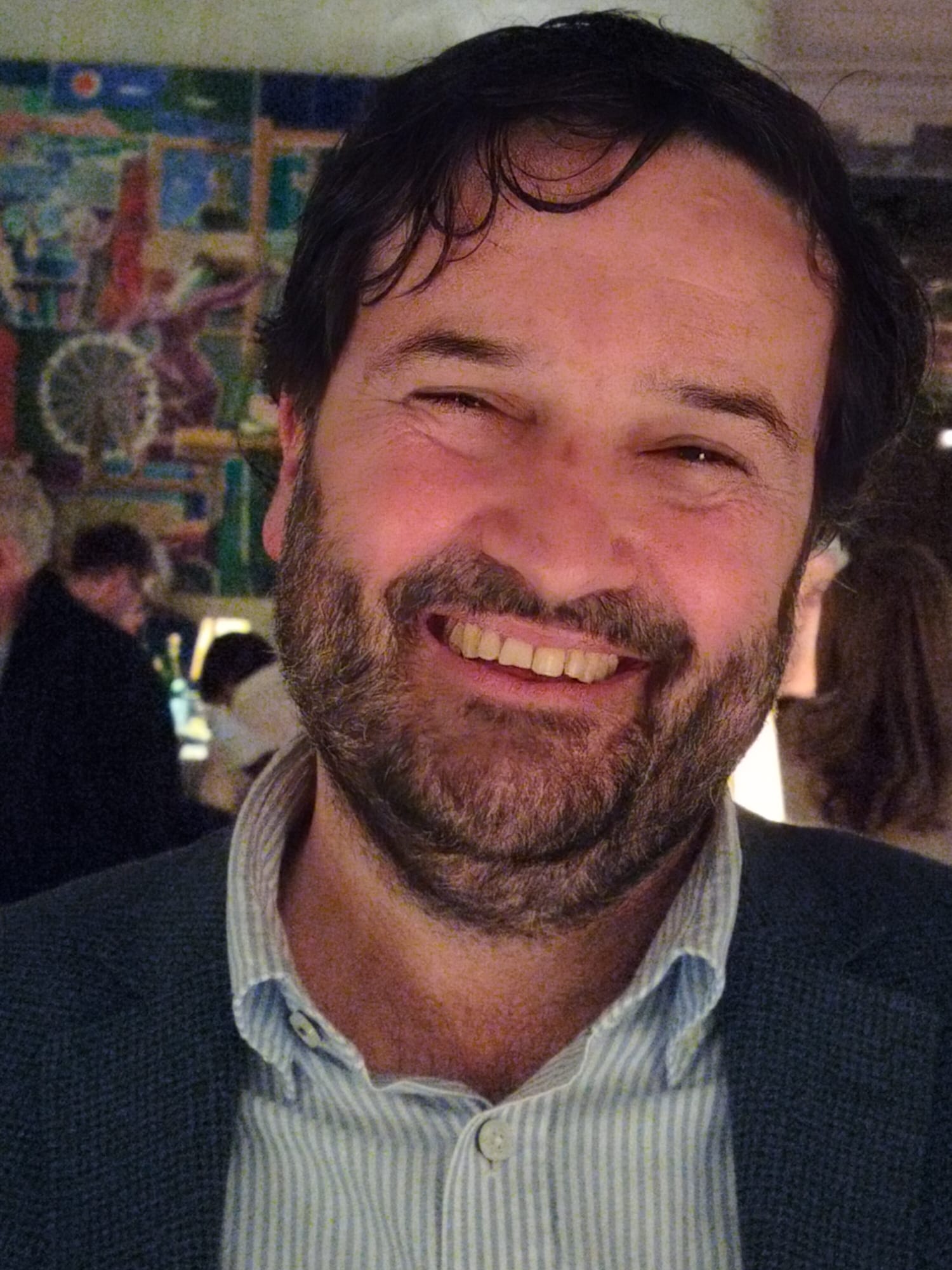 Colin German
I am a Catholic husband and father of two young adults as well as a CLC member for over 20 years. Professionally I work as a business consultant serving small and medium-sized enterprises (SMEs) in various aspects of navigating growth and even sheer survival. I didn’t know much about Catholic Social Teaching however when I heard about Teaching Tuesdays, the subjects and the format moved me to take the plunge and get to know more. This proved profoundly enriching, positively influencing every aspect of my personal, family, and professional life.
Related Posts:
By examining the tensions between democratic institutions, citizen participation, social movements, and the common good, the article opens a path for reflecting on how new forms of power emerge and how societies can respond to them. As AI systems increasingly shape public life and influence collective decision-making, Bado's vision of a more participatory and substantive democracy challenges us to consider how technology can be governed in ways that promote justice, inclusion, accountability, and human dignity. We invite readers to revisit this earlier reflection as a valuable source of inspiration for discerning how democracy may evolve in response to the opportunities and risks posed by AI and for ensuring that technological progress continues to serve people and the common good.

In Magnifica Humanitas, Pope Leo XIV warns that machine intelligence in war ends by “reducing victims to data.” The machine profiling that registers a person for food can also be used to select a person as a target. A small drone circling a road, with no one steering it, can have such a profile as its target. A drone like this is an autonomous weapon system. Once activated, it selects and attacks targets by itself, matching what its sensors detect to a programmed target profile. No human being decides, at the moment of the strike, that this particular person will die or is the right target. The case most often cited as the first use of such a weapon against people, reported by UN experts, was in Africa, in Libya in 2020.

Democracy, which has historically proven most effective in meeting these criteria, cannot be taken for granted. In our AI era, citizens should press for more than multiparty elections and the protection of basic freedoms; that institutional core is not enough. We must carefully regulate and channel powerful technologies with the capacity to divide us from one another and short-circuit social and political participation. That means maintaining spaces in civil society where human contact and social friendship can flourish without the mediation of machines, beginning with the educational systems through which all citizens pass. It means fighting deepfakes and disinformation in the public sphere, so that citizens still operate in a world of facts and evidence and political representation has a strong basis.
Artificial intelligence (AI) is increasingly entering public life in Ghana, including through digital systems used for identification, verification and service delivery. The ethical question is therefore not simply what AI can do, but what happens to people when digital systems become gateways through which citizenship, mobility or access to services are recognised. In northern Ghana, especially in border communities, this is a concrete question. I was privilege to visit Pusiga community in November 2025 with a Jesuit friend of my mine who is originally from the community. Thus, the topic for this article resonates very well with me.
The article ‘Pandemic and Authoritarianism’, by Germán Rosa, SJ, was written in the midst of the COVID-19 crisis, but its insights extend beyond that context. The pandemic appears to reveal and accelerate political trends that were already present: the concentration of power, the weakening of democratic checks and balances, and the acceptance of extraordinary restrictions in the name of collective security. Rosa’s main concern is that fear may lead citizens to silently surrender their freedoms and rights, and that measures which were initially intended to be temporary become normalized and endure. Furthermore, in societies riven by inequality, control is never distributed neutrally: it falls most heavily on the impoverished, marginalized groups, migrants, dissidents and those who defend rights and territories.
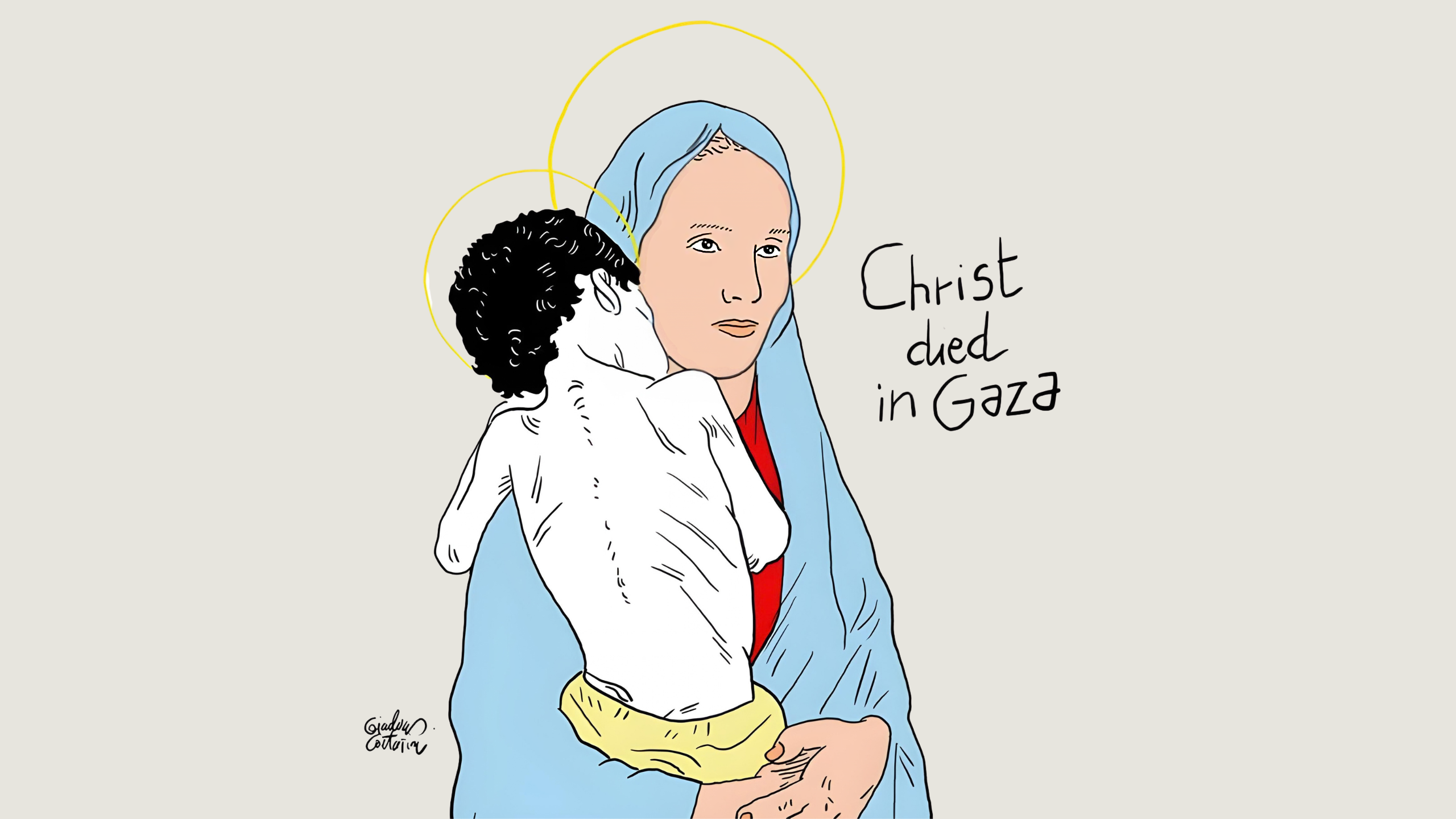
Speaking of dead children is uncomfortable. Yet it can also be healing. As I listened to the stories shared that day, I found myself returning to memories I may at times shy away from remembering. Iremember finding my sister’slifeless body in bed one Saturday morning. Ihad cometo carry her out with me to watch cartoons.As I listened tothe story of Hind Rajab, a 5-year-old girl who had been trapped inside a car attacked by Israeli forces,the memory of a little boy reaching out to touch his sister came back. The young girlhadmanaged to call the Red Crescent for help but hours later she and the paramedics who had come toassisther were all found dead. The chilling story reminded me of the shocking cold that struck my hand as I gently touched my sister’s arm in a futile attempt to wake her up.