Latin America- Fe y Alegría: Documents on Indigenous Migrant Itineraries
The Integral Ecology and Pan-Amazon Initiative of the International Federation of Fe y Alegría will present the "Collection of Documents on Indigenous Migrant Itineraries".
This collection was produced in collaboration with Venezuelan indigenous migrants in Roraima (Brazil), specifically with Warao indigenous people, located in the Warao a Janoko Community, and the E'ñepá de Caruto indigenous people, located in Abrigo Jardim Floresta. The Fe y Alegría Foundation of Roraima developed the pedagogical activities. It followed the implementation framework of the Project "Amazonia, Care for the common home: Awareness raising, intercultural education, bilingual education and care for nature in the Fe y Alegría centres."
The ALBOAN and the Xavier Network financially supported the production of the collection of documents. In addition, the anthology is part of the academic contributions of the Federal University of Roraima, through an extension activity of the Laboratórios Socionaturais Vivos Programme and the assistance of the Grupo de Estudos Interdisciplinares Sobre Fronteiras: Processos Sociais e Simbólicos (GEIFRON).
The anthology consists of the following:
1. Socionatural Calendars
The Calendars correspond to the E'ñepá indigenous community of Caruto in Bolívar and, broadly, to the Warao indigenous communities of the Lower Delta in the state of Delta Amacuro in Venezuela.
With the Warao Socionatural Calendar, we approach the socio-natural activities commonly developed in the predominantly aquatic environments of the canals of the Orinoco River. On the other hand, with the Socionatural Calendar of the E'ñepá de Caruto, we approach the activities commonly developed in the savannah, rivers and jungles of the states of Bolívar and Amazonas. The different natural spaces allowed us to understand the diversity of knowledge related to fishing activities among the Warao Indians and the variety of knowledge of the E'ñepá Indians regarding hunting birds and other high-protein animals.
The Socionatural Calendars and the cultural maps complement the Intercultural Inductive Method (MII) devised and applied by Gasché in the Peruvian Amazon to analyse social activities integrated into nature.
2. Ethnomaps and cultural maps of the mobility of the E'ñepá indigenous people of Caruto
These materials allow us to understand how this group represents their territories, including the regions they construct throughout the displacement process. The exercise in this pedagogical activity involved analysing the actions of moving, getting to know and discovering themselves to represent their territorial references spatially. From this experience, it was possible to understand the complexity and heterogeneity of the social fabric woven in the "coming and going" matrix of mobility in which the place was full of separations, re-encounters and adventurous incursions.
3. Warao and Eñepá educational primers
In producing the primers, we had the opportunity to analyse two socio-natural activities chosen by the participants: the Warao chinchorros and the Initiation Ritual for E'ñepá púberes. These activities were carried out regularly in the respective communities. Its analysis through the application of the Intercultural Inductive Method allowed us to identify indigenous knowledge present in their step-by-step execution, as well as the motivations and needs that led members of the community to set objectives to carry them out.
In addition, it was possible to produce outreach materials to raise awareness about the mobility itineraries of these groups beyond their original territories and even beyond the borders established by national states:
Documentary on the experiences of the mobility of the E'ñepá de Caruto indigenous people
Álbum fotográfico do Ritual de Iniciação de púberes E'ñepá.
Three photographic exhibitions entitled a) Exposição Fotográfica Oficina do Ritual de Iniciação E ́ñepá do Sítio Águas Boas; b) Exposição Fotográfica Oficina de Elaboração de Redes Warao do Centro Social São Bento; c) Exposição Fotográfica Oficina do Ritual de Iniciação E ́ñepá do Programa de Pós-Graduação em Sociedades e Fronteiras da Universidade Federal de Roraima.
Social Justice and Fe y Alegría's commitment
These awareness-raising documents allow us to give visibility to the social injustices that result from interventions in the Amazonian territories, how displacement materialises, and the consequences that mobility has on people's lives, affecting their lives in general, including their learning processes.
Faced with this reality, Fe y Alegría makes public its position regarding education challenges with indigenous populations forced to migrate to urban contexts. “It is a reality that challenges us, and we take it as a commitment which characterises us a popular education movement.”
The anthology presentation will be broadcast on Facebook: International Federation of Fe y Alegría on 21 November at 17:30 (Peru/Colombia time).
Information from feyalegria.org
Source : Jesuitas.lat
Related Posts:
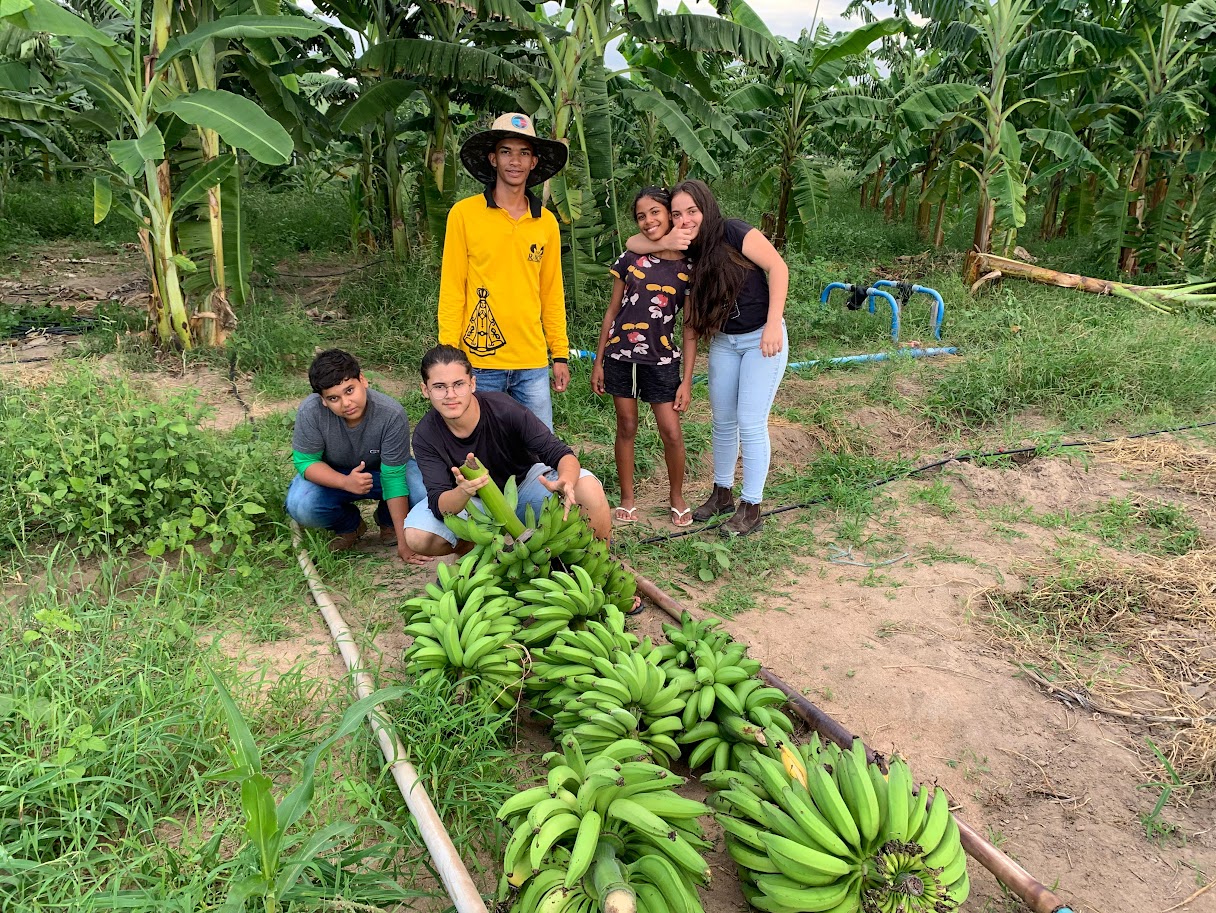
The Jaboticaba Agricultural Family School in Brazil reuses water for sustainable food production in a semi-arid region. Since 1993, it has combined agroecology with wastewater treatment to enhance food security and educate students. The project promotes environmental sustainability and aims to influence public policies in line with Pope Francis’s call for integral ecology.

His journey was marked by a profound sense of detachment, as he left behind his nationality, culture, security, history, and companions to embrace a completely foreign environment.
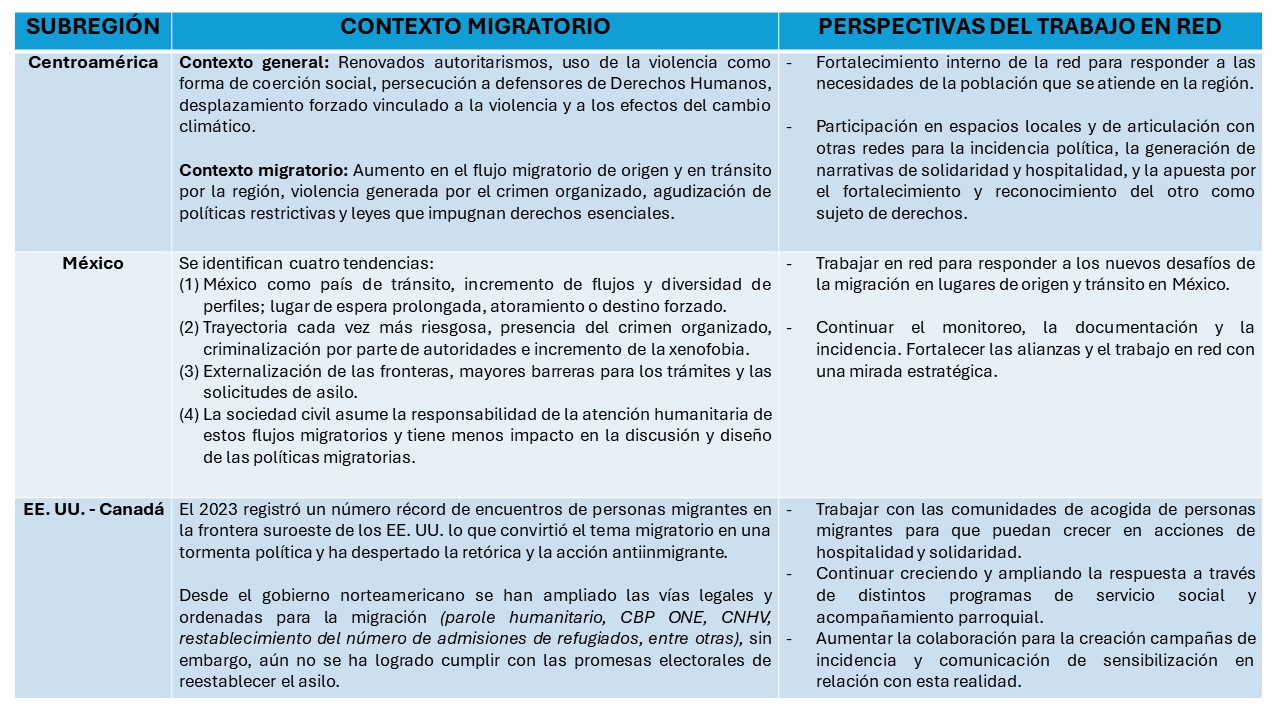
Jesuit Network with Migrants Central America and North America (RJM CANA) shared the first four months of the year report (January – April 2024): "They have been months of a lot of work to face the challenges in the migration context characterized by an increase in the migratory flow in vulnerable conditions throughout the region, however, also These have been months in which the fruits of networking have been confirmed".
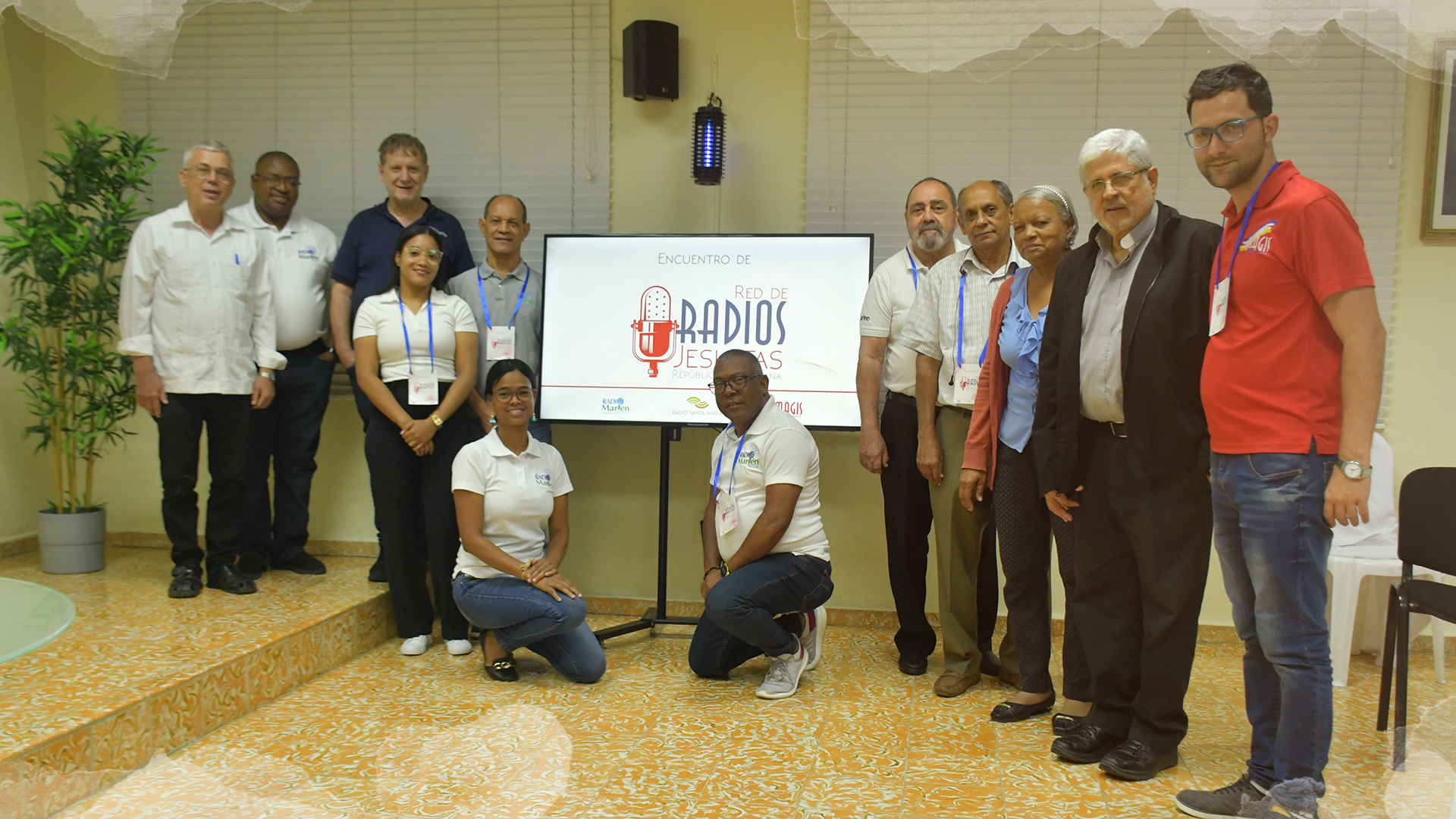
From April 5 to 7, the Jesuit Radio Network in the Dominican Republic met at the facilities of the Loyola Polytechnic Institute (IPL) in San Cristóbal. During the meeting, the construction of a shared itinerary that seeks to focus on collaboration and contextualized radio communication marked by the Apostolic Preferences approved by the Society of Jesus for the coming years was highlighted.
On Wednesday, April 10, the European Parliament voted on the European Pact on Asylum and Migration. JRS Europe directors jointly opposed the pact and urged European institutions to reject it: "We cannot support a system that will allow the systematic detention of thousands of people, including children, at the EU external borders."
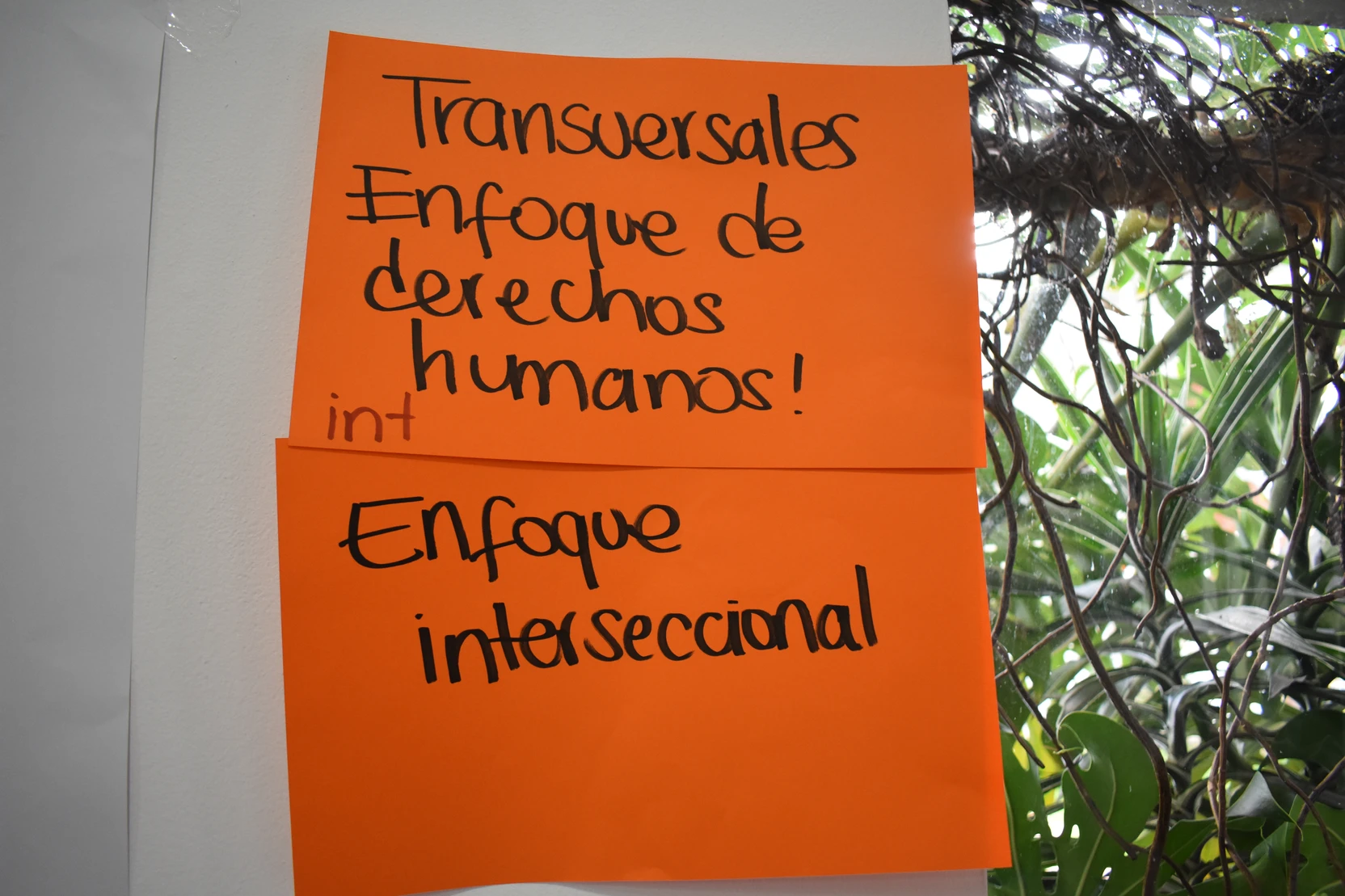
The Cartagena Declaration, adopted in 1984, emerged in response to the growing displacement crises in Latin America. Its importance lies in its expanded approach to defining a refugee, recognising the causes of displacement beyond armed conflict events. Despite progress in these 40 years, implementation challenges of the recognition criteria and the commitments made in the adopted plans persist.