
Excluded by an Algorithm: Technological Discrimination in Migration Systems
In Europe today, a refugee is identified first by a biometric system, before the perilous journey they endured to flee danger is heard. At the United States border, an asylum seeker may be told to seek protection through a phone application before a human being listens to how their rights were violated by violence and persecution that brought them there. In Jordan, a poor migrant family may discover that a data-driven system, shaped more by institutional efficiency than human need, has determined that they do not qualify for support to start life anew.
These are not isolated incidents. They belong to a wider pattern in which artificial intelligence-driven systems touted by governments and institutions as objective and trustworthy are often experienced by forcibly displaced people as exclusionary and dehumanizing. In practice, this can mean a refugee missing a single digital notification and losing access to a legal appointment or being unable to complete an online form because of language or technical barriers and therefore being excluded from a process that determines one’s future. JRS Europe’s work with refugees and migrants in Greece, Hungary and Malta shows how easily exclusion can take root when digital systems become difficult to navigate.
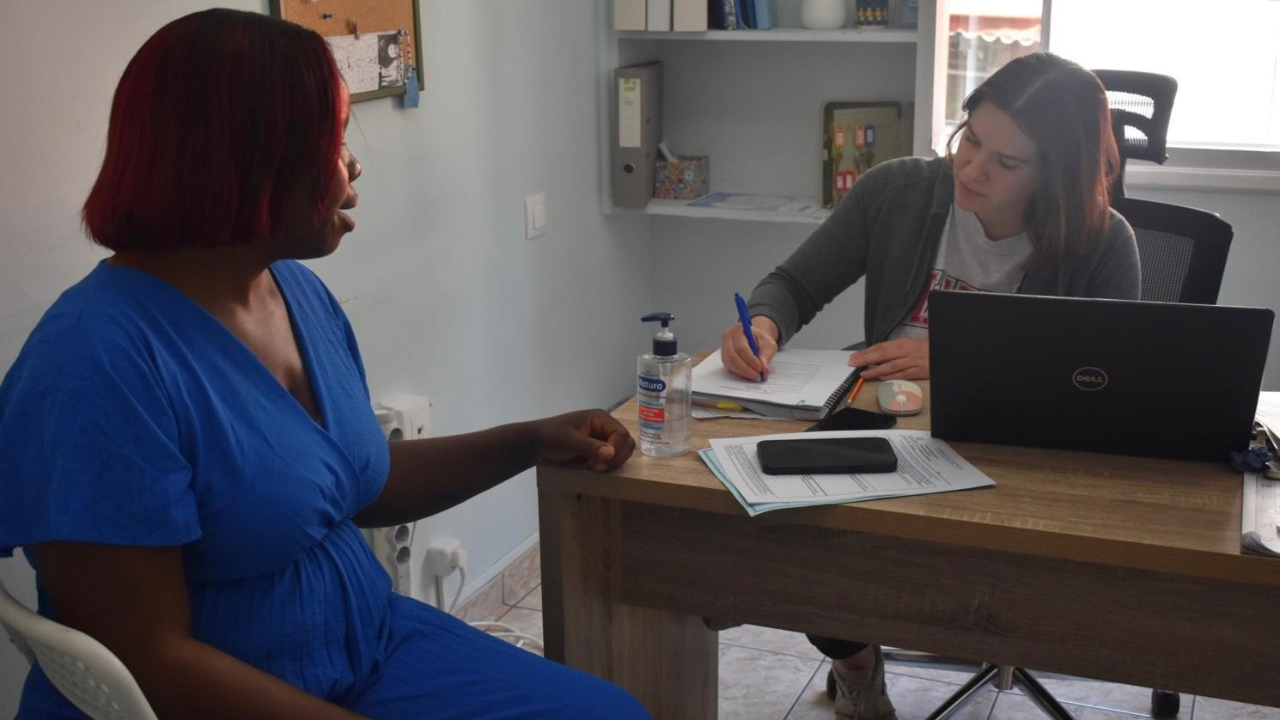
Picture 1: With support from JRS Greece, a mother of three is only able to access healthcare appointments for her family. Her story shows that as appointments move online, digital barriers can prevent vulnerable families from accessing basic care.
Another form of technological exclusion, less dramatic but no less serious, occurs when migrants and asylum seekers are caught in procedures without clear information, explanation, or a real understanding of their rights. In its input to the 2022 Asylum Report, JRS Europe highlighted cases in detention where people struggled to communicate with the outside world and were not properly informed about international protection, leaving them within a system they could neither fully understand nor effectively navigate (JRS Europe 2022).
Migration and Human Dignity
Migration is one of the most polarizing issues our society faces today, and one that will continue to shape our shared future. Human beings have always moved in search of safety, dignity, and a better life. If we fail to see humanity on the move first as persons and receive them instead as data, threats, or problems to be solved, we not only fail them but also diminish the best of humanity in all of us.
This article argues that AI and automated systems can improve complex migration processes, but they must not operate independently of human oversight if the rights and dignity of migrants, refugees, and asylum seekers are to be protected. The Ignatian practice of accompaniment helps clarify what such oversight entails, particularly in ensuring that people remain visible and heard within systems that affect their lives.
The Promise and Limits of AI
AI can speed up procedures and improve access to information and services, but these gains matter only if systems remain transparent, accountable, and open to human judgment (IOM 2024, World Migration Report; Stanford Impact Labs 2024; UNHCR 2024, Digital Transformation Strategy). Otherwise, efficiency may come at the cost of dignity and fairness.
When those conditions are absent, technological discrimination is no longer merely a technical problem within a system; it becomes something that affects how a person is treated and whether they can move on with their lives. The harm often begins before a final decision is made. It begins when a person is processed by a system before their story is patiently heard. Refugees and migrants experience it in real life as delay, exclusion, and helplessness. Some describe not knowing why a decision was made or what they needed to do next, leaving them dependent on systems they cannot understand or challenge (Ozkul 2023). A student supported by JRS in Malta illustrates this clearly. He is in his third year studying financial services and secured an apprenticeship with a company that values his work. However, many of the systems used in his placement require an electronic ID (e-ID), which is only available to people with a residence permit. Because he is still in the asylum procedure, he cannot access it. His employer has been flexible, but he has still missed important learning opportunities. The same barrier affects access to public support. JRS Malta reports that student stipends are often processed through digital systems linked to an e-ID. Without it, applications must be submitted in person, where they are sometimes delayed or not processed at all. In one case, a student who applied for a stipend in November is still waiting for a response, with only weeks left in the academic year. A system designed for efficiency becomes, in practice, a barrier to accessing opportunities they should be able to access.

Picture 2: Residents at Dar Pedro Arrupe in Zejtun, Malta. JRS Malta has accompanied students and asylum seekers who face difficulties accessing education and support because key digital systems require an electronic ID.
Similar barriers appear elsewhere in Europe. In a testimony shared by JRS Hungary, a 75-year-old displaced Ukrainian described the experience this way:
“I have a very hard time using the internet and filling out online surveys. The surveys are lengthy, the questions are complicated, and at my age, it is very difficult. Before coming to Budapest, I only used Facebook, Viber, and a few other applications to a limited extent. The forms, programs, and requests only begin to make sense once volunteers explain everything.”
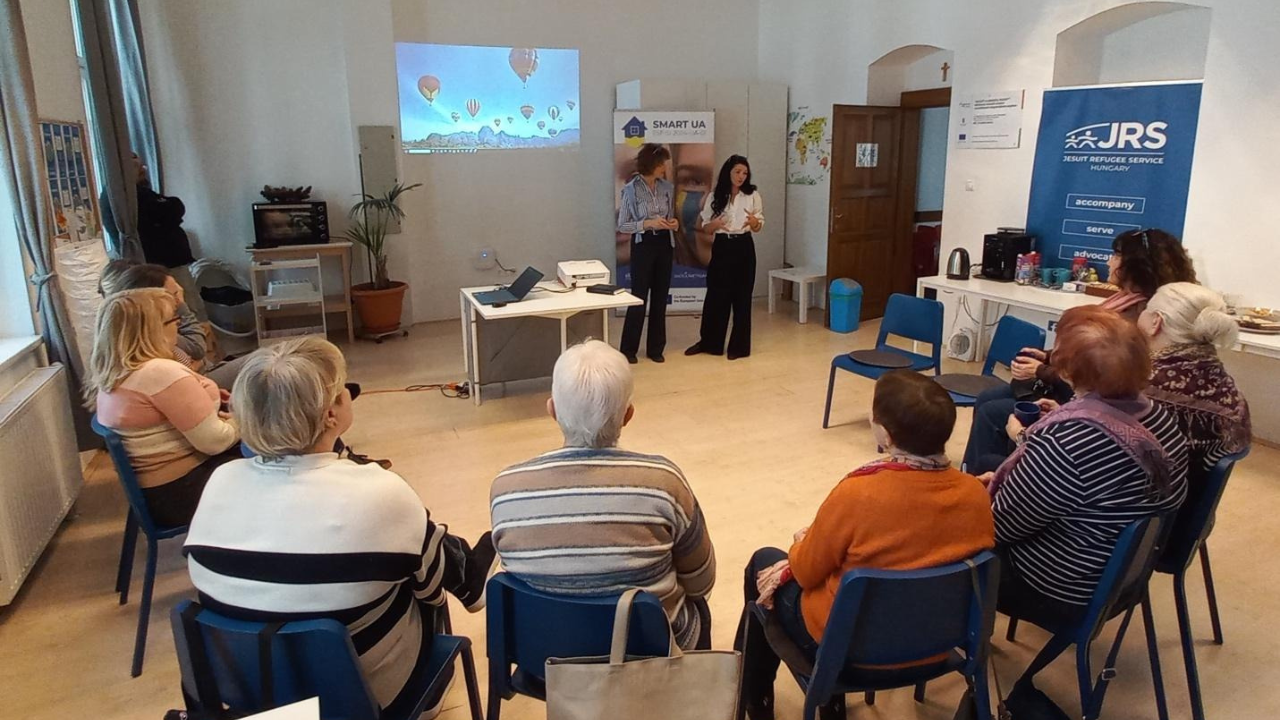
Picture 3: SMART UA basic digital skills assessment and training for older adults conducted by JRS Hungary.
Technology also shapes how people are seen and treated as they navigate asylum and migration processes. Germany’s use of automated dialect recognition illustrates this shift. Introduced in 2017, the tool analyzes speech patterns to support asylum decisions. The tone of the encounter changes when a claimant is first treated as a voice sample rather than a person seeking protection. The harm is not only legal or procedural, but also about trust. An asylum seeker often enters the process frightened and vulnerable. If the first response is a machine that checks and classifies them rather than a person who listens, the whole experience changes (Ozkul 2023).
Even ordinary-looking systems, like automated welfare payments, can have serious human effects. A change in payment can affect food, transport, or a child’s needs. If the system gets something wrong and no one can explain it clearly, the family suffers in immediate and practical ways. To make matters worse, people who already have fewer resources, such as limited language skills, legal knowledge, digital literacy, or a lack of support, are more likely to struggle and be harmed by delays, confusion, or unclear decisions (Ozkul 2023).
From Systems to Persons: Accompaniment as a Response
These experiences raise a broader question about how such systems are evaluated. Efficiency, scale, and consistency do not tell the whole story. A system can work well administratively and still feel confusing and dehumanizing to the person inside it.
This same way of “not losing sight of the person” is deepened in the Jesuit practice of accompaniment. Michael Schöpf, JRS International Director, describes JRS as beginning in “every relationship where we accompany a forcibly displaced person,” and he names listening as essential to that relationship, especially in situations marked by uncertainty, trauma, and loss. He also recalls Pedro Arrupe’s conviction that JRS should offer a service that is “human, pedagogical, and spiritual” (Schöpf 2026,SJES Reflections). From this perspective, the problem with automated exclusion is not only that a system may be inaccurate. Accompaniment helps ensure that, even within large systems, no person is reduced to a caseload or rendered invisible. Over time, it can shape how institutions see people, so that refugees, asylum seekers, and migrants are encountered first as cases to process rather than as persons seeking to rebuild their lives and to be received humanely. Pope Leo XIV raises a similar concern, warning that technological systems should never reduce the human person to data, efficiency, or output. Technology can assist human work, but it cannot replace human judgment, responsibility, and the need to encounter people as persons (Leo XIV 2026,Magnifica Humanitas).
At its core, accompaniment means walking with a person rather than deciding at a distance. It begins with listening and understanding a person’s situation before responding. In the context of migration, this means resisting the tendency to reduce individuals to cases or data points. It means ensuring that people remain visible, heard, and able to engage in the process that shapes their lives. In institutional terms, this means designing systems that allow for explanation, review, and human engagement at each stage of the process. Human oversight provides the structure of accountability, but accompaniment helps ensure that this structure remains humane and attentive to the person within it. In this context, accompaniment is not separate from human oversight; it helps clarify what such oversight requires in practice.
Discernment and Ethical Evaluation
Closely connected to accompaniment is the practice of discernment. Simply put, discernment asks what is really happening and what effect it has on people. Applied to migration technologies, this means asking not only whether a system works efficiently, but what it does to the person who must live with it. Does it help someone receive fair treatment, a clear explanation, and a real chance to be heard? Or does it reduce that person to a number, a file, or a pattern that must be verified? Does it make decisions more understandable and accountable, or harder to question and challenge? These are not questions that can be answered by technical performance alone. They have to be asked from the standpoint of those who carry the weight of the system.
Practical Accompaniment and Rights-Response
If digital systems now shape who is seen, heard, or excluded, accompaniment must become more concrete within these realities. Affirming dignity is not enough. Accompaniment today must also help people navigate, question, and respond to the systems affecting their lives.
This begins with helping a person understand what happened. When someone is excluded due to a missed notification, an automated refusal, or an unclear digital process, the first task is often simple but essential: to sit with them, review the process, and identify where the breakdown occurred. Many are excluded not because they are ineligible, but because the system was not accessible to them.
Accompaniment also means restoring a person’s ability to respond. This may involve helping them submit an appeal, reschedule a missed appointment, or complete a digital process they could not manage on their own. In such cases, access to a phone, a stable internet connection, translation services, or patient guidance can make the difference between exclusion and inclusion.
It also means knowing when to refer and how to defend rights. When decisions affect legal status, protection, or basic needs, people should be connected to legal aid, available digital support, and trusted community organizations or case workers who can accompany them over time. They should also be helped to understand that they have the right to an explanation, a review, and a challenge.
Finally, accompaniment is not only personal but structural. It means advocating for systems that remain accessible, transparent, and accountable, while refusing to let efficiency diminish a person's humanity. Seen in this light, human oversight is not simply a technical safeguard; it is a way of “seeing” the person. Migration technologies can assist decision-making, but they cannot replace the responsibility to listen and respond. If AI applications are to serve migration governance well, they must remain within a framework where human judgment is present, accessible, and accountable.
Conclusion: The Human Question
AI and automated systems help migration processes move faster and function more efficiently. But for the people who must live within them, the question is not only whether they work, but whether they still leave room for a person to be seen, heard, and able to respond.
Exclusion often begins long before a final decision is made. It begins when someone cannot understand a process, cannot access a system, or cannot challenge an outcome that will shape their future.
This is why accompaniment matters. It reminds us that no system, however advanced, can replace the responsibility to listen, explain, and remain close to the person. Accompaniment, then, is not simply a response to technological systems; it is what prevents those systems from becoming blind to the person. A system that functions efficiently is not necessarily a just system. It becomes more fully just when it leaves room and promotes a human response shaped by dignity, respect, and accountability.
References
- International Organization for Migration. 2024.World Migration Report 2024. Geneva: International Organization for Migration.https://publications.iom.int/books/world-migration-report-2024
- Jesuit Refugee Service Europe. 2022.Annual Report 2022. Brussels: Jesuit Refugee Service Europe.https://jrseurope.org/wp-content/uploads/sites/19/2023/10/Annual-Report-2022-reduced-size.pdf.
- Jesuit Refugee Service Europe. n.d. “Immigration Detention.’’https://jrseurope.org/en/programme/immigration-detention/
- Jesuit Refugee Service. 2026. “Jesuit Refugee Service: A Global Apostolate of the Society of Jesus.”SJES Reflections, February 13, 2026.https://www.sjesjesuits.global/sj-reflections/jesuit-refugee-service-a-global-apostolate-of-the-society-of-jesus/
- Leo XIV. 2026.Magnifica Humanitas: On Safeguarding the Human Person in the Time of Artificial Intelligence. Vatican City: Libreria Editrice Vaticana.www.vatican.va/content/leo-xiv/en/encyclicals/documents/20260515-magnifica-humanitas.html
- Ozkul, Derya. 2023.Automating Immigration and Asylum: The Uses of New Technologies in Migration and Asylum Governance in Europe. Oxford: Refugee Studies Centre, University of Oxford. PDF:https://www.rsc.ox.ac.uk/files/files-1/automating-immigration-and-asylum_afar_9-1-23.pdf
- Stanford Impact Labs. 2024. “How Can New AI Tools Improve Integration and Resettlement Outcomes for Migrants Globally?” September 10, 2024.https://impact.stanford.edu/article/how-can-new-ai-tools-improve-integration-and-resettlement-outcomes-migrants-globally
- United Nations High Commissioner for Refugees (UNHCR). 2024. Digital Transformation Strategy 2022-2026. Geneva: UNHCR.https://www.unhcr.org/digitalstrategy/
Author

Rev. Raymond Anthony C. Parcon, SJ, is a Jesuit priest of the USA West Province. He holds a bachelor’s degree in mechanical engineering from Ateneo de Davao University, master’s degrees in software engineering and cybersecurity from National University, and an advanced computer security certificate from Stanford University. He studied social philosophy at Loyola University Chicago and later earned a Bachelor of Sacred Theology and a Master of Divinity from Regis College at the University of Toronto. He also completed a master’s degree in International Migration and Refugees at Georgetown University’s School of Foreign Service. Raymond has worked with the Jesuit Refugee Service in Malta and Romania, accompanying refugees from Africa, the Middle East, and Ukraine. He now serves with JRS Europe in Brussels in the programs and mission identity department.
Cover Image Credits: A Venezuelan migrant unsuccessfully tries to access the CBP One app in Nogales, Mexico, in January 2025. | Photo: John Moore/Getty Images | Source: El País (Published on 10 March 2025)
Related Posts:

Artificial intelligence makes Matthew Carnes’s proposal to move towards an economy of solidarity and reconciliation, grounded in the dignity of every person and the common good, especially urgent. Faced with a technological transformation that renders precarious work invisible, perpetuates discrimination, and threatens to concentrate the benefits of increased productivity, the text invites us to ask not only how much value innovation creates, but who shares in that value, who is excluded, and what conditions enable human flourishing. Lifelong learning, social protection, and the participation of those displaced by these changes emerge as essential conditions if artificial intelligence is to serve decent work rather than an economy without workers.
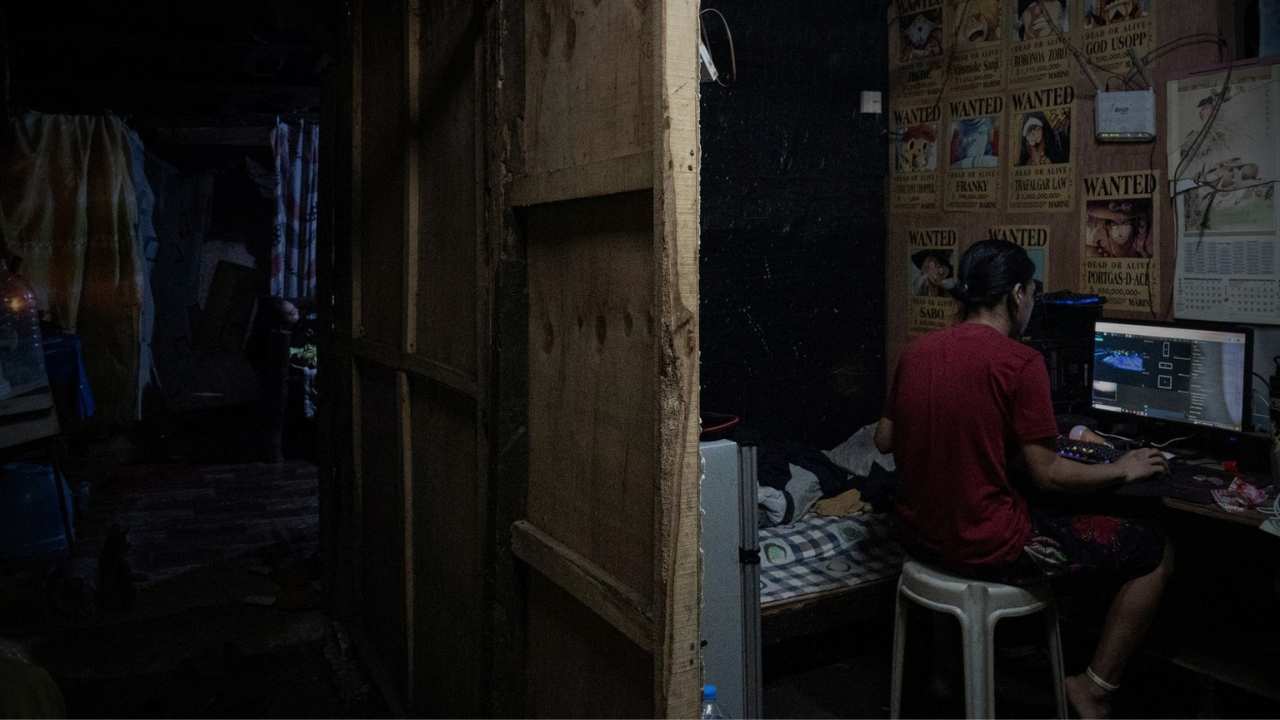
Artificial intelligence (AI) is transforming the world of work on several fronts simultaneously. It alters the conditions of those who work to make it possible, often in invisible and precarious jobs; it changes hiring, organizational, and career advancement processes, where automated decisions can reproduce historical inequalities under the guise of neutrality; it heralds a new labor paradigm in which part of the economic value may grow without a proportional increase in human labor; and it transforms the way we educate professionals who will have to coexist with it, altering both teaching methods and the competencies required of graduates.
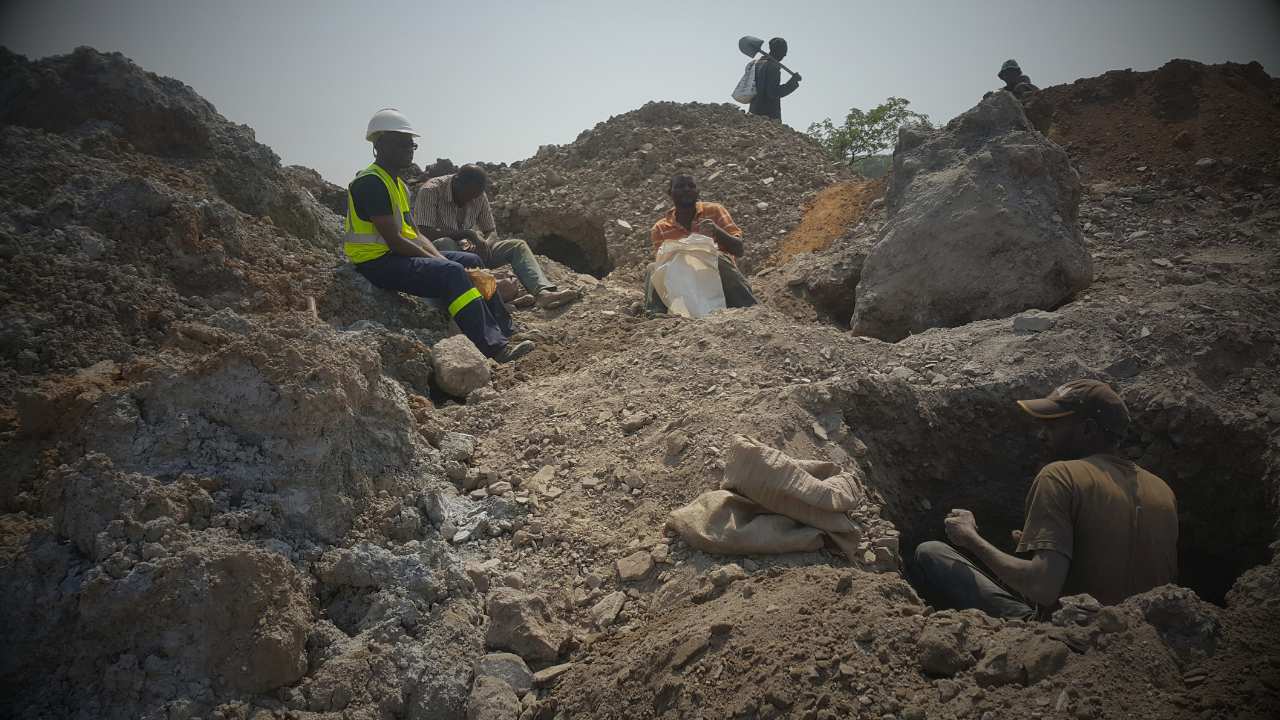
The inseparable link between those minerals and artificial intelligence haunts my daily life here. I do not approach this link through the archive, but through the ground I was born and raised on. To tell this history is not to complain about a stranger who wrecked our region; it is to take responsibility for what is happening in my country. And so, reading Pope Leo's new encyclical, Magnifica Humanitas (MH), I begin with the question that has long followed me: When will the majority of Congolese finally benefit from their own immense natural wealth, rather than paying for it with their suffering, and, too often, their lives?
The Industrial Revolution asked whether economic progress could be reconciled with workers' dignity. It also challenged the assumption that economic progress is inherently good. Can greater productivity alone be called progress if it comes at the expense of human dignity, social cohesion, or the natural world? More than a century later, artificial intelligence poses a different but equally profound challenge. Machines are no longer transforming only how we produce goods; they are beginning to transform how we think, decide, create, and even relate to one another. The question before us is therefore not merely technological. It is anthropological.
There are times when remaining silent ceases to be prudent and begins to look too much like indifference. I sincerely believe we are going through one of those times. The events unfolding around Ceuta—the images of people attempting to reach Spanish territory by sea or by swimming, the lives lost, and, above all, the narratives that immediately began to take shape around these events—should compel us to engage in a much deeper reflection than what is allowed by hasty headlines, political slogans, or viral social media posts.
Artificial intelligence is often presented as an immaterial technology, yet it rests on a very concrete infrastructure: devices, data centers, and networks whose manufacture requires minerals such as tin, gold, cobalt, lithium, and copper. For this reason, reading AI from the perspective of socio-environmental justice means looking toward the territories where its supply chains begin: communities marked by conflict, precarious economies, ecological damage, and violations of human rights.