Connexions: JESUIT SOCIAL SERVICES, Melbourne Australia
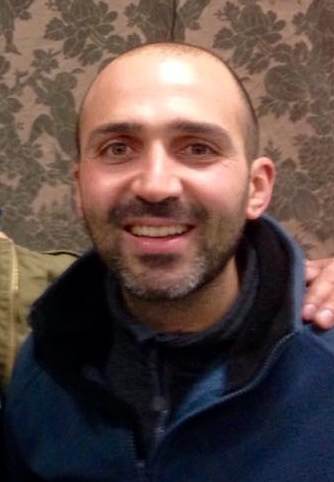 Nunzio Di Benedetto, SJ (ASL)
My name is Nunzio Di Benedetto and I’m a Jesuit Brother of the Australian Province.
I have for the past three years worked in a service called Connexions as part of my regency, which I entered shortly after completing my Masters in Counselling Psychology at Boston College.
Connexions is a program of Jesuit Social Services in Melbourne and was established in 1996 to support young people with concurrent mental illness and substance addiction (those with a “dual diagnosis”).
At Connexions we provide counselling to young people aged 16 to 28 years of age who meet the dual diagnosis criteria, and attempt to address the people we accompany is a holistic way.
In the three years working in this ministry I have discovered much about the nature of addiction, mental illness and even more about myself. The central role of the counsellor is to enter into the world of the other and help them to discover what is true and real beneath a myriad of psychological defences. There can be a great temptation however to use my professional role to deny any commonality I might have with the people I accompany. But in entering into the world of the other I must be in touch with my vulnerable self, for this is the basis for an authentic connection. Achieving this can sometimes feel like an impossible task, for in encountering the emotional and spiritual poverty of another I must confront my own.
I will share an experience. Jerome is a 20 year old Caucasian male from the eastern suburbs of Melbourne. He had received numerous mental health diagnoses in the past, including anxiety, depression, Borderline Personality Disorder, Schizophrenia, Bi-polar Disorder and drug-induced psychosis. His drug use included cannabis, alcohol, speed, ICE, LSD and mushrooms. Previous hospitalizations and rehabilitations had not been proven successful. He had attempted suicide three times previously and had a history of self-harm, which included both cutting and burning.
As I began engaging with Jerome in counselling I discovered that he was a young person asking deep existential questions of himself: “Who am I? What is my place in the world? What is life’s meaning?” In his search for identity and purpose he (surprisingly!) took pride in being a social outcast and in having a mental illness. He could become extremely isolated as a result. As our conversations progressed, we discovered a deep distrust in human relationships. Underlying all of this was an extensive history of abuse and trauma. At this stage Jerome smoked cannabis heavily to help him manage his crippling anxiety, depression and loneliness.
After nearly a year of weekly therapy Jerome showed significant signs of improvement. He was engaging socially, feeling hopeful and making concrete changes in his life. I felt that we were succeeding. Then one day I received a phone call informing me that Jerome had threatened to kill himself. He was on a train and said that his thoughts of suicide were so intense that he was compelled to act on them. Police had been informed and he was eventually picked up from the train station and hospitalized.
I was deeply affected by this sudden turn of events. Thoughts were running through my head: “What have I done wrong – how could I not have predicted this?” I was finally able to speak with Jerome over the phone later that day. He spoke with clarity about his strong desire to die. He wanted help, but felt that nobody was able to give this to him. He felt hopeless and alone. I was now feeling the same.
Jerome eventually did find the help he needed within the public hospital system. He was ever grateful for our “chats” in counselling. Our journey together had not simply been one of a professional with a client. It was a journey of ever deepening trust and mutual respect between two people. While Jerome remains a vulnerable person, I trust in our relationship wholeheartedly. I know that if things get hard for him, he can and will approach me. He knows he is cared for and this makes it feel worthwhile.
There is an incredible uncertainty in counselling work. In Jerome’s case, I don’t know what is going to happen with him in the future or whether our sessions were ever helpful to him. Such challenges have led me to ask some deeper questions of myself. For one, why do I what I do?
I’m not sure if I can articulate it fully, but I do know what I feel. When I relate to my clients in the sessions, I know that I feel real. I do not want to be in any other place. I am not acting: I feel genuine and at home in my role. But there are times when I feel lost and powerless. At such times I recognise that I am encountering something of what the person before me feels and I am being invited to be with them there. Not to do or fix, but simply to be.
In Jesuit life, the pressure to become what one is not is a constant temptation. If this vocation of ours is to remain authentic, we must learn to die, to let go of false images of self as savior or messiah: we must contain the ego. The authenticity I speak of is an invitation to depth. The genuineness demanded by those I accompany has beckoned me to enter more fully into my own “depths” and recognise my incredible need for the Lord. He is the One who will save and heal – I am but a faulty instrument. In this hidden work I have often been encouraged by the words of Mother Teresa: “Not all of us can do great things. But we can do small things with great love.”