Latin America – Gaël Giraud SJ, the ecological economist
Sarh is the third largest city in Chad, in the south of the country, on the banks of the Chari River. It is in this town, which today has 100,000 inhabitants, that Gaël Giraud arrived 25 years ago to do his two years of civil service. He taught mathematics and physics at the Saint-Charles-Lwanga Jesuit college. For this young man with a brilliant university career, who would become a researcher at the CNRS (National Center for Scientific Research), the temple of French scientific research, this experience was both a shock and a revelation.
"There I saw materially, already at that time, both the scarcity of water in an area that was still savannah and the very rapid advance of desertification," says the Jesuit economist. "This made me - a Parisian who came from the French university elite - realize, by touching it with my own hands, that the problem of desertification, global warming, water scarcity, soil erosion, biodiversity, was something extremely tangible."
Street children, or the cry of the poor
A two-year stay in a city where there was not even electricity brought Giraud face to face with another reality, this time a human one: street children. He spent the first year as a volunteer at the Jesuit school in Sarh, but then decided to spend the second year among the locals, in the material conditions of the poor.
Every morning he goes to the well for water and prepares tea on the kanoune, the brazier. Day after day he finds himself side by side with the children who live on the street. Not those who beg for alms, as prescribed by the "madrasas" or schools where they study, but those who no longer have a family or are forced to leave it so as not to weigh more on the shoulders - often - of their mother.
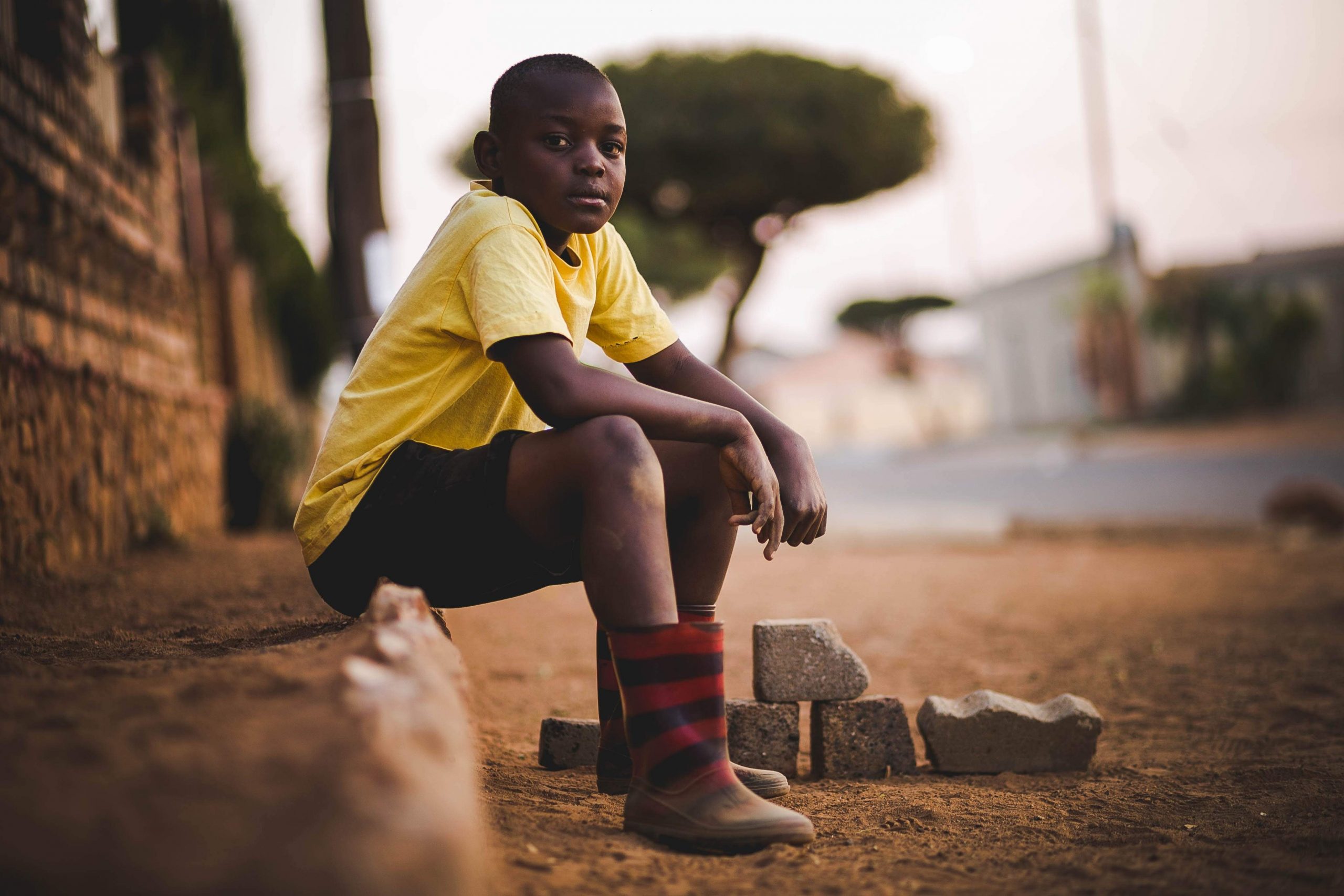
Photo by Kenex Media sa from Pexels
Gaël Giraud then settled in the ruins of the Rex cinema to sleep with them. Thus was born the Balimba center, which today stands a few kilometers from the city. There are no more than 40 children who find shelter, food and education here. The most violent among them do not go to school, but receive an education on the spot, thanks to the teachers who come on purpose.
Understanding that everything is connected
This experience "allowed me to see with my own eyes what it means for the dispossessed to be victims of global warming," he explains. "Deep down, when in the encyclical Laudato si' the Pope says that the cry of the earth and the cry of the poor are one and the same cry, I find there the experience that street children in Chad made me live through twenty years ago," says the priest.
Back in France, Gaël Giraud studied to become a Jesuit and followed a theological training while continuing his work as an economist. "Little by little, the experience I had in Chad and what I learned in the field of economics made me see how my task was to understand, as an economist, the extraordinary impact of climate change on the population."
Faith challenged and confirmed
Father Gaël Giraud's personal reflection and works have been influenced by faith. "The experience of Christian faith nourishes in me the "hope against all hope" that makes me not have - or not immediately have - the reflex to hide in denial" of the environmental situation and the ongoing catastrophe. At the same time, his faith has grown.
"Today I perceive much more strongly the fragility of creation, as well as the fact that creation is placed in our hands and that we have a responsibility as its custodians," the Jesuit explains; and so writes Pope Francis in Laudato si'. We are not the owners of creation: the only owner of creation is God. But He himself "does not want to be the master of the world, but its servant". And this is the path we must follow, says the economist.
Laudato si', an event
Gaël Giraud therefore welcomed the encyclical Laudato si' with "extraordinary surprise." This text, according to the economist, is "the most important ecclesial event since Vatican II". The whole world soon realized that "it was the first time that an international institution, in this case the Catholic Church, had taken such a clear, prepared and correct position at the global level on the fundamental question of the ecological crisis, which is that of our generation".
Gaël Giraud is convinced: "We Christians have a role, a responsibility in the resolution of this very serious crisis". For the Jesuit priest, one of the anthropological causes of the current situation is the conception, which appeared in the 16th and 17th centuries in Europe, of man as master and lord of nature. Christian anthropology differs from this conception.
We have to understand the meaning of "mastering the Earth", as expressed in the Book of Genesis, with the meaning of "serving the growth of creation".
It is therefore up to Christians, strengthened by this biblical and spiritual tradition embodied in particular by St. Francis of Assisi, to "invent together solutions to the ecological crisis". This is what Gaël is committeican Newsd to do in the new mission entrusted to him by the Society of Jesus: to create and develop an environmental justice center at Georgetown University in Washington, USA.
Source: Vatican News
Related Posts:
Addressing today's environmental crisis requires educational institutions to embrace a transformative commitment. Inspired by the papal call and the framework of Integral Ecology, Jesuit universities are strengthening both their institutional practices and advocacy efforts while responding to the urgent challenge of fully integrating environmental education into their formal curricula.

Marking the 10th anniversary of Laudato si’, Pope Leo XIV sends a videomessage to the Network of Universities for the Care of Our Common Home, and encourages their synodal reflection ahead of COP30.

It is from Latin America and the Caribbean that we present and disseminate this recently published work, the fruit of a two-and-a-half year working group that brought together Universities linked to AUSJAL and Social Centers linked to RCS (Jesuit Social Centers Network), all participants in the Conference of Provinces of Latin America and the Caribbean (CPAL). The work, which involves ten countries and 15 organizations, looks at the relationship between the environment and corruption in our continent innovatively, analyzing our challenges in the light of Integral Ecology.

Fr Roberto Jaramillo SJ, Secretary for Social Justice and Ecology (SJES) of the Society of Jesus in Rome, was in Jakarta recently. His visit provided an opportunity for dialogue with about 40 staff members of Sahabat Insan, the Jesuit centre for migrant workers. Their conversations centred around Laudato sí’s recommendation, paragraph 63: exploring local cultural wealth to develop an ecology capable of addressing the damage done to the Earth.

The Fossil Fuel Non-Proliferation Treaty (FFNPT) is an initiative that strives for an international agreement to phase out fossil fuel while ensuring a just global transition for workers, communities, and countries.